
If you believe that a standard mop and bucket are sufficient to maintain a heavy-duty production environment, you may be inadvertently inviting a regulatory crisis. Most facility managers understand the daily pressure of maintaining high standards whilst balancing operational budgets; it’s easy to assume that if the floors look clear, the job is done. However, treating technical maintenance as a basic chore often leads to recurring safety hazards and inconsistent standards in high-risk zones.
Relying on general janitorial staff for complex tasks can result in accelerated machinery wear and failed HSE inspections. This article will help you discover the critical differences between general work and specialist industrial cleaning to protect your facility’s safety. We’ll explore why technical expertise in areas like industrial washroom services is essential for meeting the 2026 GB CLP chemical labelling requirements. By the end of this guide, you’ll understand how to reduce long-term maintenance costs whilst ensuring your site remains a benchmark for professional compliance.
Key Takeaways
- Distinguish between a standard “visual clean” and the “operational clean” required to maintain safety and efficiency in high-risk manufacturing environments.
- Understand the severe fire risks associated with combustible dust and why specialised high-level maintenance is a regulatory necessity.
- Learn why professional industrial washroom services and the correct application of technical chemicals are essential for protecting both your workforce and your machinery.
- Identify the critical role of Risk Assessments and Method Statements (RAMS) in ensuring your facility remains fully compliant with HSE standards.
- Discover the hallmarks of a dependable North East cleaning partner capable of delivering bespoke solutions for regional business parks.
Debunking the ‘One-Size-Fits-All’ Myth in Commercial Cleaning
Many business owners mistakenly assume that commercial cleaning is a universal service. However, a production facility requires an “operational clean” that prioritises safety and machinery performance, whereas an office focuses on a “visual clean” for aesthetics. Industrial cleaners are technical specialists trained to operate within high-risk, high-traffic manufacturing and storage environments where the stakes are significantly higher. Whilst a comprehensive overview of cleaning reveals shared principles across sectors, the execution in a manufacturing plant is vastly different from a corporate suite.
Generalist cleaners often find themselves ill-equipped when faced with industrial-grade residues. Standard detergents simply cannot break down the carbonised oils, synthetic polymers, or heavy particulate dust found on a factory floor. Without the correct chemical knowledge, attempts to clean these surfaces can actually create slip hazards or damage expensive equipment. This is why facility-specific protocols are vital for warehouses and production lines. These protocols ensure that every zone, from the loading bay to the specialised industrial washroom services, is treated with the correct methodology.
The Definition of Specialist Industrial Cleaning
Industrial cleaning is defined as the technical removal of hazardous substances and heavy-duty contaminants to ensure a facility remains fully compliant with HSE safety standards. Whilst surface sanitisation is common in offices, industrial environments require deep degreasing and the removal of combustible materials. Specialist teams understand that their work isn’t just about hygiene; it’s a critical maintenance function that prevents machinery downtime and protects professional reputations by avoiding avoidable accidents.
Why General Office Cleaners Are Not Industrial Experts
The transition from a desk-based environment to a factory floor involves more than just a change in location. It requires rigorous training in hazardous waste management and the safe handling of industrial chemicals. Using standard office tools in a warehouse risks cross-contamination, especially in sensitive areas where hygiene must be managed alongside heavy-duty production waste. Maintaining industrial washroom services in a 24-hour manufacturing plant, for example, requires a different frequency and chemical profile than a standard office toilet block.
- Floor Integrity: Specialist cleaners understand that treating an epoxy resin floor or polished concrete with the wrong pH-level cleaner can strip the protective coating.
- Hazardous Waste: Industrial experts are trained to identify and dispose of materials that would overwhelm standard municipal waste streams.
- Chemical Safety: Knowledge of the 2026 GB CLP chemical labelling requirements is essential for any team operating in a technical environment.
Relying on a partner that lacks this specific expertise doesn’t just result in a poor finish; it creates a liability. A “safe pair of hands” in this industry is one that recognises the unique engineering challenges of your site and applies a bespoke strategy to manage them. Facility managers looking to formalise their approach can benefit from reviewing a dedicated factory cleaning services North East protocol guide to transition from reactive maintenance to a structured compliance framework.
The Hidden Risks of Inadequate Industrial Maintenance
The assumption that “a bit of dust on the rafters doesn’t hurt anyone” is a dangerous misconception that puts industrial facilities at significant risk. In a manufacturing or storage environment, dust isn’t merely an aesthetic nuisance; it’s a potential fuel source. Over time, fine particulate matter settles on high-level beams, lighting fixtures, and ducting. If this combustible dust is disturbed, it can lead to flash fires or secondary explosions that cause devastating structural damage and threaten the safety of every person on site.
Combustible Dust and High-Level Hazards
Managing overhead debris is a legal necessity for manufacturing plants to ensure the continued safety of the workforce. Neglecting these hard-to-reach areas often leads to failed insurance audits and severe regulatory penalties. Implementing a regular schedule for high level cleaning is the only reliable way to mitigate these fire risks. By removing contaminants from the facility’s structural skeleton, you protect the building’s integrity and ensure your business remains compliant with stringent fire safety orders.
Slip Resistance and Floor Longevity
Improper degreasing is another area where hidden risks manifest. Many general cleaners use domestic-grade detergents that leave a microscopic film on industrial surfaces. This residue actually reduces slip resistance, making the floor more dangerous than it was before cleaning. Professional maintenance requires a deep understanding of OSHA safety and health guidelines and local COSHH regulations to select the correct chemical agents. In the North East, businesses must ensure that their cleaning protocols include thorough Risk Assessments to prevent costly litigation arising from workplace accidents.
The financial impact of poor maintenance extends to the quality of the air your staff breathe. Inadequate ventilation and dust accumulation directly affect air quality, leading to respiratory issues and reduced productivity. This decline in hygiene standards often starts in high-traffic zones. If your industrial washroom services aren’t managed with the same technical rigour as your production line, bacteria and pathogens can spread rapidly through the facility. Ensuring your site is a safe environment requires more than a superficial sweep; it demands a technical partner who understands the gravity of industrial-scale hygiene. You can professionalise your facility management by choosing a partner that prioritises these technical standards.
- Financial Risk: Replacing industrial flooring due to chemical damage is significantly more expensive than regular professional care.
- Staff Welfare: High hygiene standards in industrial washroom services directly correlate with lower staff absenteeism.
- Regulatory Compliance: Verifiable cleaning logs are essential for demonstrating your commitment to HSE standards during inspections.
Equipment and Chemicals: Why Domestic Grade Fails in Industry
Using domestic-grade products in an industrial unit is similar to using a garden hose to extinguish a factory fire. The scale of the challenge is fundamentally different, yet many facility managers still fall for the myth that “stronger” chemicals are always better for industrial messes. In reality, aggressive abrasive acids often etch concrete or corrode metal fixtures, leading to long-term structural degradation. Professional cleaners prioritise the science of pH-neutral degreasers that emulsify oils whilst preserving the integrity of the substrate.
Industrial Chemistry vs. Household Soap
Technical cleaning requires a precise selection of chemicals based on the specific contaminant present. Removing carbon black requires a different chemical profile than emulsifying hydraulic oil or stripping synthetic polymers. Industrial-grade disinfectants also rely on specific “contact times” to be effective, a factor often overlooked by generalist teams. With the 2026 GB CLP chemical labelling regulations now in force, using the correct agents isn’t just about efficacy; it’s a legal requirement to ensure all substances are correctly classified and handled. This technical rigour is especially vital when managing industrial washroom services, where high-traffic hygiene must be maintained without damaging sensitive plumbing or surface finishes.
The Role of Heavy-Duty Machinery
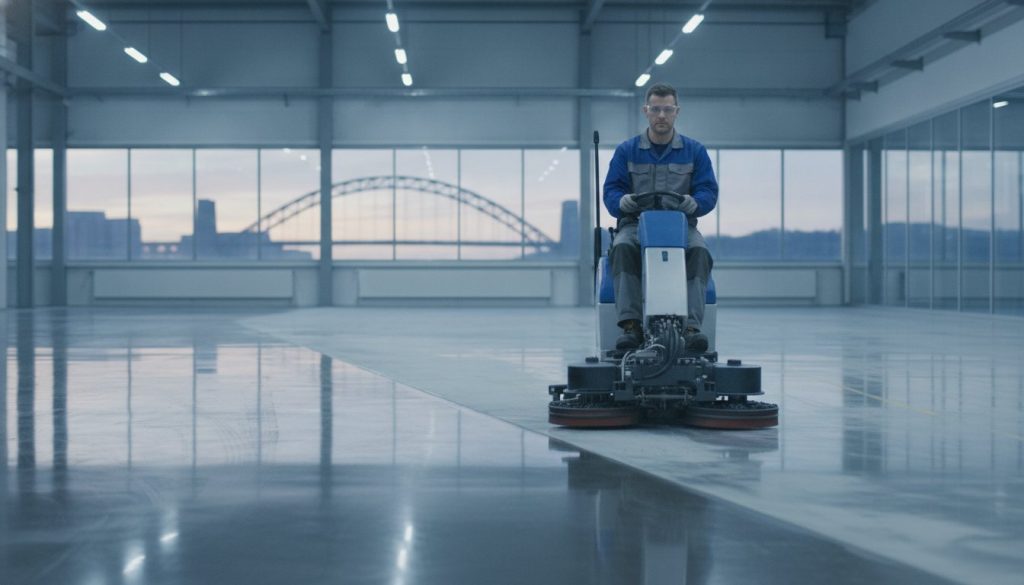
A standard mop is fundamentally incapable of managing the vast floor areas of a modern warehouse. It merely redistributes dirt and leaves behind a wet film that creates a significant slip hazard. In contrast, a ride-on scrubber-dryer applies a cleaning solution, agitates the surface with industrial brushes, and recovers the water instantly into a waste tank. This leaves the floor dry and safe for immediate pedestrian or forklift traffic. For fine particulates like silica or metal shavings, professional teams utilise HEPA-filtered industrial vacuums to ensure these dangerous particles aren’t simply recirculated into the breathing zone.
- Steam Cleaning: This method allows for the sanitisation of production lines and machinery without the use of harsh chemicals, protecting both the environment and the equipment.
- Waste Compliance: Under the new digital waste tracking service (DWTS) introduced in 2026, every movement of industrial cleaning waste must be recorded, a process requiring professional oversight.
- Equipment Certification: Operating heavy-duty machinery for industrial cleaning Sunderland requires specific training and certification to meet site-specific safety standards.
The difference between a “clean” look and a technically sound environment lies in the tools used. By employing heavy-duty machinery and site-specific chemistry, businesses can reduce long-term maintenance costs and ensure their industrial washroom services and production zones remain compliant with the latest HSE standards. Relying on specialised equipment is a hallmark of a partner that understands the gravity of industrial-scale maintenance.

Compliance and Health & Safety: Beyond the Mop and Bucket
A common misconception in facility management is the belief that cleaning is a low-risk activity that doesn’t require formal health and safety documentation. In an industrial context, this assumption is not only incorrect but potentially litigious. Every task performed on a technical site requires a bespoke Risk Assessment and Method Statement (RAMS). These documents aren’t mere formalities; they’re essential blueprints that dictate how a team will operate safely around high-voltage equipment, moving production lines, and hazardous chemical stores. Without these, your business is exposed to significant regulatory risk.
Professional cleaning partners do more than just maintain hygiene; they actively support your organisation’s broader quality and environmental goals. By providing verifiable cleaning logs and chemical usage data, a specialist contractor helps you maintain ISO 9001 and ISO 14001 certifications. This level of detail is particularly vital for secure sites that require DBS-checked and professionally vetted staff. Ensuring that every operative on your site is accountable and trained to work within restricted zones protects both your physical assets and your professional reputation.
Navigating HSE Regulations
Maintaining a regular cleaning schedule provides a critical “due diligence” trail for HSE inspectors. If an incident occurs, being able to produce documented evidence of floor degreasing or high-level dust removal can be the difference between a minor observation and a major fine. This is especially true for industrial washroom services, which must comply with the Workplace (Health, Safety and Welfare) Regulations 1992. These regulations mandate specific hygiene standards and facilities based on your employee headcount. For a deeper understanding of these requirements, consult our building maintenance standards guide for 2026.
Vetting and Training for Industrial Sites
Cleaning in a warehouse or factory isn’t the same as cleaning a retail unit. Operatives must undergo “lone worker” training and adhere to strict high-vis protocols to remain visible to forklift drivers and heavy machinery operators. Site-specific inductions are a non-negotiable requirement for any reputable contractor. These inductions ensure that cleaning teams understand the specific hazards of your facility, from emergency stop locations to designated pedestrian walkways. By managing the safety of their own teams whilst working amongst your production staff, professional firms ensure that hygiene maintenance never becomes a distraction or a danger to your core operations.
If you’re concerned about your current level of site documentation or the vetting of your cleaning staff, it’s time to request a compliance audit from a technical specialist. Ensuring your facility meets every legal requirement is the only way to operate with total peace of mind.
- Legal Protection: RAMS protect your business from liability in the event of a workplace accident.
- Audit Readiness: Detailed hygiene logs simplify the process of achieving and maintaining ISO standards.
- Security: DBS vetting ensures that only trusted professionals have access to your sensitive industrial zones.
Selecting an Industrial Cleaning Partner in the North East
Selecting a partner for industrial maintenance is a decision that directly impacts your site’s safety and operational continuity. In regional hubs like Newcastle, Gateshead, and Sunderland, local knowledge is a strategic advantage rather than a luxury. A provider familiar with the specific layouts and logistical challenges of North East business parks can offer response times that national firms struggle to match. This proximity ensures that if a spill occurs or a production line requires urgent sanitation, your partner is already within reach, protecting your facility from prolonged downtime.
A dependable contractor should be viewed as a “safe pair of hands” that understands the gravity of industrial-scale hygiene. Reliability in this sector is built on technical competence and a methodical approach to safety. Transitioning from an inadequate service to a professional maintenance contract doesn’t have to be a disruptive process. A seasoned partner will begin with a thorough site audit and a review of your current RAMS to identify vulnerabilities. By addressing gaps in your industrial washroom services or floor maintenance, they can implement a phased improvement plan that elevates your facility’s standards without halting your core production.
Key Questions for Your Prospective Contractor
When evaluating a prospective contractor, you must look beyond the basic cost. Ask about their specific experience with your facility type. A cold storage unit requires different chemical protocols and thermal safety equipment than a heavy engineering workshop. Verify that they hold the correct insurance levels for high-level work and industrial machinery operation. Enquire about staff retention rates; high turnover often leads to inconsistent standards and a loss of site-specific knowledge. A stable team is more likely to understand the nuances of your production schedule and safety culture. For facilities in the region, exploring dedicated warehouse cleaning services Newcastle providers with proven industrial expertise is an essential step in this evaluation process. Managers seeking a broader operational framework may also find it valuable to consult a comprehensive factory cleaning services North East protocol guide to benchmark their current standards against regional best practice.
The Richard’s Cleaning and Washroom Services Difference
Richard’s Cleaning and Washroom Services operates as a dedicated partner for businesses across Durham, Teeside, and Northumberland. We understand the region’s industrial heritage and the high standards required to keep modern manufacturing sites compliant. By integrating daily office cleaning with specialised industrial floor care and industrial washroom services, we provide a cohesive maintenance solution. This unified approach eliminates the friction of managing multiple contractors and ensures a consistent standard of hygiene from the boardroom to the loading bay. Our teams are trained to treat your facility as a professional asset that requires meticulous protection.
- Regional Expertise: Deep familiarity with the industrial landscape of Newcastle, Gateshead, and Sunderland.
- Bespoke Delivery: Service schedules tailored to your specific shift patterns and production requirements.
- Integrated Solutions: Combining office hygiene with heavy-duty industrial maintenance for total site compliance.
Professionalism is not merely about the final result; it’s about the methodical, organised way that result is achieved. Choosing a local expert ensures that your facility remains a safe, compliant, and efficient environment for your entire workforce.
Securing the Future of Your Industrial Facility
Maintaining a heavy-duty production environment requires a shift from superficial cleaning to a technical maintenance strategy. The transition from a “visual clean” to a true “operational clean” is essential for protecting your machinery, your staff, and your professional reputation. Relying on specialised equipment and site-specific chemistry ensures that your facility remains a safe and efficient hub, whilst meeting the latest HSE standards. From managing combustible dust to providing compliant industrial washroom services, the focus must always remain on precision and safety.
Richard’s Cleaning and Washroom Services has provided local North East expertise since its inception, offering a “safe pair of hands” for regional manufacturing hubs. Our approach is built on comprehensive RAMS and COSHH compliance, utilising specialist equipment for high-level care and warehouse floor maintenance. By choosing a partner that understands the technical gravity of your industry, you eliminate the risks associated with inadequate maintenance. To ensure your site meets every regulatory requirement, you can Request a Professional Site Audit from Richard’s Cleaning. Taking this step today protects your operational continuity and reinforces your commitment to workplace safety.
Frequently Asked Questions
What is the difference between commercial cleaning and industrial cleaning?
Commercial cleaning typically focuses on aesthetic maintenance for offices and retail spaces, whilst industrial cleaning involves technical engineering support for manufacturing environments. Industrial operatives use specialised chemistry to remove heavy residues like carbonised oils and synthetic polymers. This process ensures machinery performance and structural safety, whereas commercial work prioritises surface hygiene and presentation for employees and visitors who expect a visual standard of cleanliness.
How often should an industrial warehouse be professionally cleaned?
The frequency depends on your specific production volume and the level of particulate matter generated by your operations. High-traffic zones and industrial washroom services usually require daily attention to maintain hygiene and safety standards for the workforce. Conversely, technical tasks such as high-level dust removal or deep floor degreasing are typically scheduled on a quarterly or bi-annual basis to ensure long-term facility compliance and machinery longevity.
Are industrial cleaners responsible for hazardous waste disposal?
Professional contractors manage the removal of industrial waste, but the legal responsibility for accuracy remains with the waste producer. Under the 2026 Digital Waste Tracking Service (DWTS) regulations, every movement of waste must be recorded digitally to ensure full transparency. A specialist partner ensures that hazardous substances are correctly classified and transported to authorised facilities, providing you with the necessary documentation for your compliance trail and protecting your reputation.
Do industrial cleaning companies provide their own equipment?
Reputable industrial firms provide all necessary heavy-duty machinery, including ride-on scrubber-dryers, pressure washers, and HEPA-filtered vacuums. They also supply industrial-grade chemicals that are compliant with the 2026 GB CLP labelling regulations. Relying on the contractor’s equipment ensures that the tools are professionally maintained and suitable for the specific technical challenges of a manufacturing or storage environment, reducing the burden on your internal resources.
How much does industrial cleaning cost for a factory in Newcastle?
Pricing for industrial maintenance in Newcastle and the wider North East is provided on a bespoke basis rather than through fixed rates. Because every facility has unique requirements, from the square footage of the production floor to the specific profile of industrial residues, costs are tailored to each site. Providers offer personalised quotes after a professional site audit to ensure the service level matches your operational needs and regulatory obligations perfectly.
Can industrial cleaning help with HSE compliance audits?
Specialist industrial cleaning is a fundamental component of passing HSE compliance audits successfully. Contractors provide verifiable cleaning records, Risk Assessments, and Method Statements (RAMS) that demonstrate your commitment to workplace safety. These documents serve as a critical “due diligence” trail, proving that you are actively managing risks such as combustible dust accumulation and slip-and-trip hazards on the factory floor through a structured maintenance programme.
What qualifications should I look for in industrial cleaners?
You should prioritise contractors who can demonstrate thorough COSHH training and site-specific safety inductions for their operatives. For high-level work, look for IPAF or PASMA certifications, which ensure staff are qualified to use powered access equipment safely. Additionally, for secure industrial sites, ensure that all staff are DBS-checked and have undergone “lone worker” training to safely navigate environments with moving machinery and restricted access zones.
Is high-level cleaning included in standard industrial contracts?
High-level cleaning is typically treated as a periodic specialised service rather than part of a daily maintenance routine. Whilst daily tasks focus on floor safety and industrial washroom services, high-level work requires specific access equipment and technical risk assessments to manage overhead hazards. Most professional contracts will schedule these deep cleans at set intervals throughout the year to manage combustible dust and maintain overall site safety without disrupting production.