
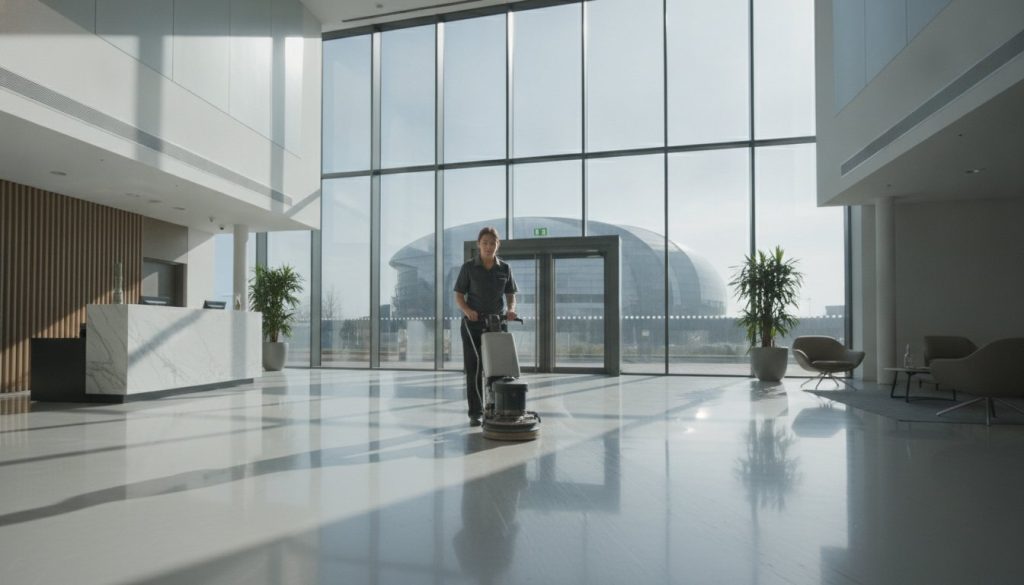
Could your current facility management strategy withstand the legal and operational scrutiny of the August 2026 GB CLP hazard standard deadline? For many property managers, the pressure of maintaining a prestigious professional reputation whilst ensuring absolute compliance with United Kingdom health and safety regulations has never been higher. Inconsistent results from fragmented business park cleaning services often lead to more than just aesthetic issues. They create genuine risks to staff wellbeing and the long term value of your physical assets.
We recognise that managing multiple specialist contractors is a complex and often frustrating endeavour. This guide provides a clear framework for professional building maintenance, ensuring your property meets the highest hygiene and safety requirements. You will learn how to navigate the mandatory digital waste tracking requirements effective from October 2026, implement hygiene standards that improve staff retention, and protect your property investment through a structured approach to commercial care.
Key Takeaways
- Understand the critical difference between basic janitorial tasks and strategic commercial building maintenance to protect your property’s long-term value.
- Navigate complex UK health and safety regulations, including COSHH and the 2026 GB CLP standards, to ensure full legal compliance.
- Discover how to implement structured business park cleaning services that enhance staff wellbeing and safeguard your professional reputation.
- Learn to develop a bespoke maintenance schedule tailored to your building’s occupancy levels and specific industry requirements.
- Identify the essential technical competencies and local expertise required when selecting a professional cleaning partner in the North East.
Understanding Building Maintenance Cleaning for Commercial Properties
Professional building care is often misunderstood as a simple janitorial requirement. In reality, it is a sophisticated discipline that safeguards the structural integrity of your premises. For those managing large-scale assets, high-quality business park cleaning services go beyond surface-level aesthetics to manage high-traffic environments and comply with strict health and safety legislation. Unlike domestic cleaning, which focuses on comfort and light maintenance, professional commercial property care involves technical procedures designed to handle the rigours of heavy daily occupancy.
For businesses across Newcastle and the wider North East, proactive maintenance is essential for preserving the fabric of the building. This includes protecting expensive flooring, preventing the degradation of ventilation systems, and ensuring that the physical asset doesn’t depreciate prematurely. A comprehensive Commercial cleaning overview highlights that professional services are integrated directly into the building’s lifecycle management, serving as the first line of defence against wear and tear.
The Strategic Value of Professional Property Care
A well-maintained environment acts as a direct investment in your company’s future. When you prioritise hygiene, you’re protecting the long-term value of your commercial asset. Research consistently shows a link between workplace hygiene and reduced staff absenteeism amongst North East workforces. A clean office isn’t just about appearance; it’s about health. It prevents the spread of infection and fosters a culture of respect and professional pride. For those managing headquarters in Durham or Sunderland, the first impression you create for visiting clients is often determined by the meticulousness of your maintenance regime. Neglecting these standards can suggest a lack of attention to detail that may reflect poorly on your core business operations.
Key Components of a Maintenance Cleaning Programme
Effective programmes balance daily operational tasks with periodic deep cleaning. Daily office cleaning ensures that common areas remain functional and hygienic for immediate use. However, specialised business park cleaning services must also account for larger-scale requirements, such as industrial cleaning or the management of shared exterior spaces. Integrating washroom services and sanitary bin management into the general schedule ensures no gaps in hygiene occur. Building maintenance cleaning is a structured approach to hygiene and asset preservation that ensures a commercial property remains safe, compliant, and structurally sound throughout its operational life. This integration allows facility managers to streamline their operations, moving away from fragmented contractor management toward a unified, dependable standard of care. For smaller occupiers within business parks, understanding how commercial cleaning services for SMEs can be tailored to specific operational needs is an equally important consideration when building a cohesive hygiene strategy.
The Four Pillars of Effective Commercial Property Maintenance
A robust maintenance strategy is built upon four distinct functional areas. By categorising services into specific pillars, facility managers can ensure that no aspect of property care is overlooked. This structured approach is particularly vital for those overseeing business park cleaning services, where the scale of the premises often masks small but significant maintenance failures. Large-scale business park cleaning services must integrate these pillars to remain effective and compliant with modern expectations.
Daily Office and Workplace Standards
Maintaining professional workspaces in Gateshead and Tyneside requires a commitment to consistency. High-performance office cultures depend on an environment that feels fresh and organised every morning. This pillar focuses on high-touch points such as lift buttons, door handles, and communal kitchen surfaces to minimise cross-contamination. By utilising professional-grade janitorial supplies, providers can achieve a superior finish that retail-grade products simply cannot replicate. Establishing a clear cleaning frequency based on footfall ensures that the workspace remains an asset rather than a distraction.
Comprehensive Washroom Hygiene Management
Washroom standards are frequently the primary metric by which occupants judge the overall quality of building maintenance. This pillar moves beyond basic surface cleaning to include comprehensive management. It’s essential to ensure full feminine hygiene compliance through professional sanitary bin services. For businesses operating across the county, dedicated washroom services Durham providers offer the specialist expertise needed to meet the Environmental Protection Act 1990 and Workplace Regulations 1992 requirements. A dependable maintenance programme also guarantees a constant supply of consumables, such as hand towels and soap, to maintain functionality. Neglecting these areas often leads to a rapid decline in professional reputation and user satisfaction.
Advanced Air Sterilisation Technology
Modern standards for safe indoor environments now include air quality as a core component of health and safety. Integrating Airsteril air purification units allows businesses to eliminate stubborn odours and harmful pathogens that traditional cleaning cannot reach. This technology provides continuous air sterilisation in high-occupancy commercial buildings, significantly improving indoor air quality. It’s a proactive step that protects staff health and demonstrates a high level of corporate responsibility.
For businesses operating in demanding environments, addressing the unique challenges of industrial units and warehouses is equally important. High-traffic commercial units require industrial cleaning techniques that can handle grease, dust, and heavy-duty residues. Following Health and Safety Executive guidance ensures that all cleaning activities are conducted safely and legally. If you’re looking to upgrade your current facility standards, consider how building cleaning and maintenance can be integrated into a single, cohesive strategy. This prevents the “silo” effect where different contractors fail to communicate, leading to inconsistent results across your site.
Regulatory Compliance and Health and Safety Standards
Adhering to United Kingdom legal requirements for workplace hygiene is a primary responsibility for any property owner or facility manager. Compliance isn’t merely a box-ticking exercise; it’s a fundamental safeguard for your professional reputation and the safety of everyone on site. When engaging business park cleaning services, you must ensure that your provider operates within the strict frameworks of UK health and safety legislation. This includes a thorough understanding of the Control of Substances Hazardous to Health (COSHH) regulations, which dictate how chemicals are stored, handled, and utilised. By August 15, 2026, all cleaning chemicals must comply with the updated GB CLP hazard standards, making it essential to audit your current janitorial supplies immediately.
Your Duty of Care extends specifically to the management of sanitary waste and feminine hygiene. Under the Workplace (Health, Safety and Welfare) Regulations 1992, businesses are legally required to provide suitable and sufficient sanitary disposal facilities. Whilst international benchmarks like OSHA sanitation standards provide a useful perspective on global best practices, UK businesses must focus on domestic environmental protection acts. Professional maintenance cleaning supports your overall Health and Safety policy by ensuring that these sensitive areas are managed discretely and legally, preventing the risks associated with cross-contamination and environmental negligence.
Waste Management and Environmental Responsibility
Modern waste management requires meticulous attention to detail, particularly with the introduction of the DEFRA Digital Waste Tracking Service (DWTS), which becomes mandatory in October 2026. Every movement of waste from a commercial site must be recorded in real-time. Professional contractors play a vital role here, providing the necessary waste transfer documentation to prove your compliance. By implementing sustainable cleaning practices and using eco-certified products, you can meet your ESG goals whilst staying ahead of EPR rules regarding chemical drum disposal. This level of oversight is a standard feature of high-quality business park cleaning services that prioritise long-term asset protection. Businesses seeking a broader understanding of how these regulatory pressures apply at an organisational level will find that a dedicated guide to commercial cleaning services for SMEs addresses many of the same compliance challenges in practical detail.
Risk Assessments and Meticulous Record Keeping
Every commercial cleaning activity must be preceded by a site-specific risk assessment. These documents identify potential hazards, from slip risks during floor maintenance to the safe handling of industrial cleaning equipment. Detailed service logs are equally vital; they provide a verifiable audit trail that can be used during building maintenance inspections or in the event of an insurance claim. These records demonstrate that you’ve taken all reasonable steps to maintain a safe environment. Compliance in washroom services is a non-negotiable legal requirement for UK businesses.

Organising Your Commercial Cleaning and Maintenance Schedule
Efficient property care relies on a methodical schedule that translates regulatory requirements into daily actions. A “one size fits all” approach fails in complex commercial environments where occupancy levels and industry types vary significantly. For those overseeing business park cleaning services, the schedule must be data-driven, accounting for high-traffic communal areas and specialized industrial zones. Determining the optimal frequency for maintenance tasks requires a granular understanding of how your building is actually used throughout the week.
High-traffic zones such as receptions, lift lobbies, and washrooms demand daily attention to maintain professional standards. In contrast, back-office storage or low-use meeting rooms might only require weekly or bi-weekly intervention. Balancing your budget with the necessity for high-standard care involves prioritising areas that directly impact staff health and client perception. By categorising tasks into daily, weekly, and monthly cycles, you ensure that routine maintenance never slips through the cracks.
Developing a Bespoke Cleaning Specification
A bespoke specification is the cornerstone of a successful maintenance contract. It ensures that every corner of your facility, from the executive boardroom to the warehouse floor, receives the appropriate level of care. Identifying key performance indicators (KPIs) allows you to measure cleaning effectiveness objectively rather than relying on subjective impressions. This specification should also integrate periodic deep cleans and high-level industrial cleaning into the annual plan. These intensive sessions are vital for preserving the building’s infrastructure and addressing areas that daily business park cleaning services cannot reach during standard hours.
Audit and Review: Maintaining High Standards
Upholding building maintenance standards requires more than just a good initial plan; it demands constant vigilance. Regular site inspections are essential for identifying emerging issues before they become costly repairs. These audits provide a transparent view of service delivery and ensure that the agreed standards are being met consistently. Using feedback loops allows you to refine and improve cleaning protocols over time, adapting to changes in building use or staff numbers. Professional contractors like RCWS provide transparent reporting on service delivery, ensuring you remain a “safe pair of hands” for your organisation. If you’re ready to establish a more structured approach to your facility care, you can learn more about our Building Cleaning & Maintenance solutions.
Selecting a Professional Partner in the North East
Choosing a maintenance partner is a decision that impacts your operational continuity and professional standing. For businesses in the North East, the choice often lies between large national corporations and local specialists. While national firms offer scale, a local specialist with deep roots in Newcastle and Northumberland provides a level of accountability that is difficult to replicate. Selecting a partner for business park cleaning services requires a rigorous evaluation of their technical competence, including their approach to staff training and industry accreditations. Reliability isn’t a secondary feature; it’s the foundation upon which every successful commercial partnership is built.
The Local Advantage for North East Businesses
Partnering with an established North East contractor ensures rapid response times across South Shields, Tyneside, and Teesside. Local knowledge is invaluable when managing regional commercial property portfolios, as it allows for a more nuanced understanding of site-specific challenges. By choosing a provider within the region, you’re also supporting the local economy and ensuring that your business park cleaning services are delivered by a team that takes genuine pride in the local professional landscape. This proximity allows for regular, face-to-face site inspections that uphold the high standards your premises demand.
Why Richard’s Cleaning and Washroom Services is the Logical Choice
Our organisation is built on a commitment to professional, dependable, and authoritative building maintenance. We don’t simply provide staff; we deliver a managed service that prioritises safety and asset preservation. Our expertise extends into highly specialised areas, including the installation of Airsteril units for pathogen control and the compliant management of sanitary bin collection. We understand the gravity of the services we provide and the trust you place in us to protect your reputation.
Every commercial facility has unique requirements that a standard checklist cannot satisfy. Our team is available to discuss a tailored maintenance programme that aligns with your specific occupancy levels and industry standards. To ensure your property remains a safe, compliant, and impressive asset for your clients and staff, Enquire about our Commercial Cleaning and Washroom Management services today. We provide the meticulous detail and industrial-scale capability required to keep your business running at its peak.
Securing the Future of Your Commercial Assets
Maintaining a commercial property in 2026 requires more than just a visible clean; it demands a rigorous adherence to evolving safety and environmental standards. By integrating the four pillars of maintenance and choosing a partner who understands the local landscape of the North East, you protect your staff and your physical assets. A structured programme for business park cleaning services ensures that your facility remains a safe and welcoming environment for clients and employees alike. It’s about moving beyond basic janitorial tasks to a comprehensive strategy that prioritises long-term asset preservation and regulatory compliance.
Our expertise in specialist areas, such as Airsteril air purification technology and comprehensive washroom hygiene and sanitary bin management, is backed by decades of experience serving Newcastle, Durham, and the wider North East. We understand the complexities of the 2026 hazard standards and waste tracking requirements, providing you with a “safe pair of hands” for your facility management needs. It’s time to transition from reactive cleaning to a proactive maintenance strategy that supports your broader business goals. Request a Professional Consultation for Your Commercial Property Maintenance to discuss your specific requirements. We’re ready to provide the dependable oversight your premises deserve.
Frequently Asked Questions
What is included in a standard commercial building maintenance cleaning contract?
A standard contract typically encompasses daily office cleaning, washroom services, and the provision of essential janitorial supplies. For those managing business park cleaning services, these agreements are often bespoke to cover shared communal areas, exterior spaces, and specific industrial zones. This unified approach ensures that every aspect of the building, from the reception to the warehouse, maintains a consistent professional standard without the need for multiple contractors.
How often should my commercial property be professionally cleaned?
The frequency of professional cleaning is determined by your building’s occupancy levels and the nature of your industry. High-traffic zones like lift lobbies, kitchens, and washrooms require daily attention to ensure hygiene and safety. Lower-use areas, such as storage rooms or executive boardrooms, might only need weekly or monthly maintenance. A professional assessment helps establish a schedule that balances budget constraints with the requirement for high-quality care.
Are sanitary bin services a legal requirement for my business in Newcastle?
Yes, providing suitable sanitary bin services is a legal requirement for all UK businesses under the Workplace (Health, Safety and Welfare) Regulations 1992. You have a legal Duty of Care to ensure that sanitary waste is managed and disposed of by a licensed contractor. Neglecting this responsibility can lead to significant regulatory penalties and damage to your professional reputation amongst staff and visitors alike.
What is the difference between general cleaning and industrial cleaning?
General cleaning focuses on maintaining hygiene in standard environments like offices, retail spaces, and communal areas. In contrast, business park cleaning services often include industrial cleaning for warehouses or manufacturing units where grease, heavy dust, and chemical residues are prevalent. Industrial tasks require specialised equipment and more rigorous safety protocols to manage environments that general janitorial services aren’t equipped to handle safely.
How does air sterilisation like Airsteril improve office safety?
Airsteril units improve office safety by continuously eliminating airborne and surface pathogens that traditional cleaning methods might miss. These units use advanced technology to neutralise bacteria, viruses, and mould, whilst also removing stubborn odours from the environment. By maintaining a sterile atmosphere, you protect staff health and reduce the risk of illness spreading amongst your workforce, particularly in high-occupancy commercial buildings.
Can I combine janitorial supply delivery with my cleaning contract?
Combining janitorial supply delivery with your cleaning contract is a highly efficient way to manage your facility. it ensures that essential consumables like hand towels, soap, and toilet tissue are always in stock without the need for separate procurement processes. This single-source approach reduces administrative burden and guarantees that high-quality, professional-grade products are used throughout your premises at all times.
What should I look for in a commercial cleaning risk assessment?
A robust commercial cleaning risk assessment must be site-specific and identify all potential hazards related to the cleaning process. It should cover COSHH compliance for chemical use, slip and trip prevention during floor maintenance, and the safe operation of any electrical equipment. These assessments are vital for protecting both the cleaning staff and the occupants of the building whilst ensuring full legal compliance.
Why is professional building maintenance important for property asset value?
Professional building maintenance is vital for property asset value because it prevents the premature degradation of the building’s fabric and interior fixtures. Regular, high-standard care protects expensive flooring and ventilation systems from long-term damage caused by neglect. A well-maintained property sustains a high professional reputation, which is essential for attracting and retaining high-quality tenants or clients in the competitive North East market.