
With falls from height accounting for 28% of all workplace fatalities in Great Britain during 2024/25, the management of overhead environments has become a critical focal point for industrial safety. For facilities across the North East, the accumulation of dust and debris in hard-to-reach areas represents more than just an aesthetic concern; it is a significant fire risk and a primary reason for failed health and safety or food hygiene audits. You likely recognise the necessity of maintaining these elevated spaces but may feel concerned by the logistical complexity and the potential for operational downtime during high level cleaning projects.
This professional guide explores how specialist high level cleaning protects your facility’s safety, ensures compliance, and supports long-term operational efficiency. We shall examine the rigorous safety protocols required by the Work at Height Regulations 2005, the implications of the updated BS EN 13374:2025 standards for edge protection, and the financial risks associated with the current £183 per hour HSE Fee for Intervention. By understanding the methodology behind specialist access and ground-based cleaning systems, you can secure a clean, compliant environment whilst maintaining minimal disruption to your daily production schedules.
Key Takeaways
- Understand the technical parameters of high level cleaning and why categorising internal and external tasks is essential for comprehensive facility maintenance.
- Recognise the hidden operational risks of neglected surfaces, including the threat of combustible dust and the degradation of indoor air quality.
- Evaluate specialised access methods that prioritise safety and efficiency, ensuring your facility remains compliant with the Work at Height Regulations 2005.
- Prepare for stringent BRCGS and food hygiene audits by implementing a structured cleaning regime for beams, ducting, and other elevated structures.
- Discover how bespoke facility surveys allow for the integration of specialist industrial cleaning into your daily operational requirements with minimal disruption.
What is High Level Cleaning and Why is it Essential?
High level cleaning refers to the specialised removal of dust, grease, and debris from areas situated above two metres. In the context of North East facilities, this work is a fundamental aspect of industrial cleaning and building maintenance. Standard janitorial tools aren’t capable of reaching these heights safely or effectively. Whilst many businesses focus on floor-level hygiene, the accumulation of contaminants overhead often goes unnoticed until it triggers a safety incident or an audit failure.
We distinguish between internal tasks, such as sanitising roof trusses and ventilation ducting, and external maintenance like facade cleaning or gutter clearance. Neglecting these areas doesn’t just look unprofessional; it compromises the structural integrity of the building. Commercial cleaning standards often focus on accessible surfaces, yet the air quality and safety of a facility depend heavily on what sits overhead. Professional high level cleaning ensures that every square metre of your facility, regardless of height, meets the highest standards of hygiene and safety.
The Scope of Elevated Hygiene
Commercial vs Industrial Requirements
Requirements change based on the environment. An office atrium in Newcastle city centre demands a different technical approach to a heavy manufacturing plant in Sunderland. High-traffic retail parks and leisure centres face unique challenges with high-level glazing and complex structural features that require meticulous care. The frequency of your cleaning schedule isn’t a one-size-fits-all decision. It depends entirely on your operational output. For instance:
- Food Production: May require quarterly deep cleans to satisfy BRCGS standards.
- Manufacturing: Often needs bi-annual visits to manage heavy grease and particulate build-up.
- Corporate Offices: Typically maintain safety and aesthetics with an annual high-level service.
By tailoring the frequency and method to your specific site, you protect your professional reputation and ensure your facility remains a safe environment for employees and visitors alike.
The Critical Risks of Neglecting Elevated Surfaces
Neglecting elevated surfaces creates a silent liability that can jeopardise the future of any North East business. Whilst floor-level cleanliness is easily monitored, the accumulation of particulates on rafters, beams, and ducting poses a severe threat to business continuity. In sensitive sectors like food manufacturing or pharmaceuticals, even a small amount of debris falling from height can contaminate an entire production line. This doesn’t just lead to costly product recalls; it causes irreparable damage to your professional reputation and brand trust.
Beyond production risks, there’s a heavy legal and financial burden. Failure to maintain these areas often indicates a breach of safety standards, which has dire consequences during an insurance claim. If a facility doesn’t adhere to a documented schedule for high level cleaning, insurers may argue that the property was not properly maintained, potentially invalidating your policy in the event of a fire or accident. Many facility managers also fall into the trap of assuming that general janitorial staff can handle complex maintenance tasks; understanding the common myths surrounding industrial cleaners can help you avoid costly compliance failures.
Fire Safety and Combustible Dust
Combustible dust is one of the most significant hidden hazards in industrial environments. A minor fire at ground level can create a pressure wave that stirs up dust settled on high-level structures. This creates a concentrated dust cloud that ignites, leading to a secondary explosion that’s often far more destructive than the initial fire. Compliance with the Regulatory Reform (Fire Safety) Order 2005 requires businesses to identify and mitigate these risks. Regular high-level cleans are an essential part of a robust fire risk assessment, ensuring that these secondary fuel sources are eliminated before they can cause a catastrophe.
Health, Safety, and Environmental Impact
Poor indoor air quality is a direct consequence of neglected high-level hygiene. Dust trapped in ventilation systems and on overhead pipes circulates throughout the building, contributing to respiratory issues and increased staff absenteeism. Maintaining a visibly clean environment also has a profound psychological benefit, as employees feel safer and more valued in a well-managed workspace. There’s also the physical risk of falling debris; large clumps of grease or dust can fall without warning, damaging sensitive machinery or causing personal injury to those below.
The financial implications of negligence are stark. With the HSE’s total estimated cost of work-at-height injuries exceeding £956 million in 2023/24, the importance of proactive maintenance cannot be overstated. Ensuring your facility meets the Work at Height Regulations 2005 is a legal necessity that protects both your staff and your bottom line. If you’re concerned about hidden hazards in your rafters, a professional survey for industrial cleaning can identify these risks before they escalate into serious operational issues.
Specialised Methods: Reaching the Inaccessible Safely
Effective high level cleaning requires more than just reaching a certain height; it demands a strategic choice of access equipment tailored to the specific architecture of a facility. In complex North East industrial layouts, where machinery often restricts floor space, selecting the wrong method can lead to excessive downtime or safety breaches. Our approach prioritises the hierarchy of control, opting for the safest and most efficient solution for each unique environment. We don’t just aim to clean; we aim to maintain your operational rhythm whilst ensuring total compliance with safety standards.
Safety is paramount and non-negotiable. All technicians must hold valid IPAF (International Powered Access Federation) or PASMA (Prefabricated Access Suppliers’ and Manufacturers’ Association) certifications. These aren’t optional extras; they’re the benchmark for professional competence. These qualifications ensure that operators understand the stability requirements of mobile elevating work platforms (MEWPs) and the structural integrity of tower scaffolding. By deploying only certified experts, we mitigate the risks associated with falls from height, which remains a leading cause of workplace injury in the UK.
MEWPs and Scaffolding Solutions
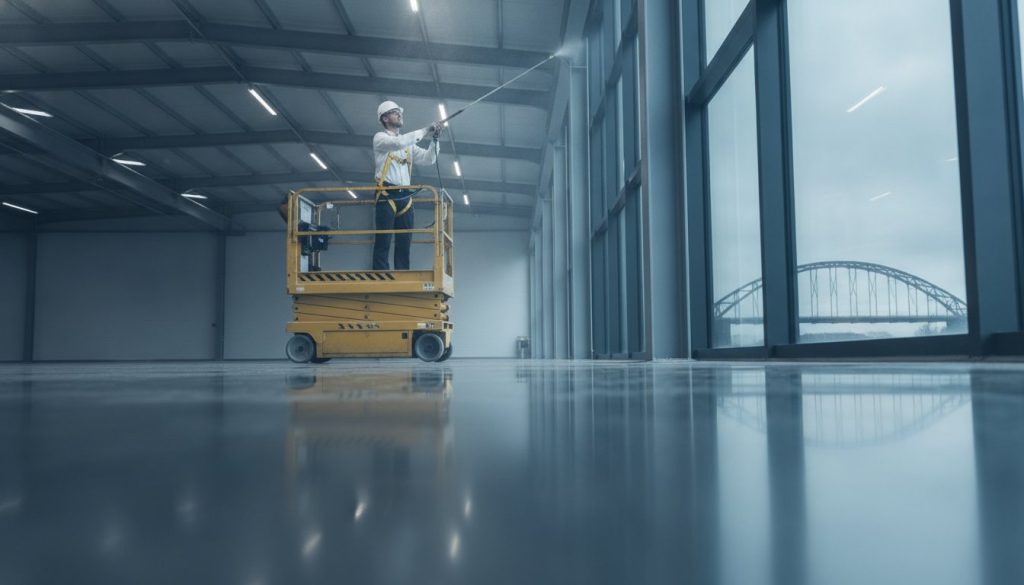
Scissor lifts provide a stable vertical platform for multiple operatives, making them ideal for wide-scale ceiling cleans in warehouses. However, for reaching over fixed production lines or into tight corners, cherry pickers or spider lifts offer the necessary articulated outreach. When using this heavy equipment, we conduct thorough assessments of floor loading capacities to prevent structural damage. In areas where floor space is too congested for MEWPs, mobile tower scaffolding provides a versatile alternative, allowing for safe access in the most restricted zones without disrupting floor-level activity.
Ground-Based High Reach Vacuums
Modern technology has revolutionised how we handle the risks of dust accumulation. Ground-based systems utilising ultra-lightweight carbon fibre poles can now reach up to 15 metres without an operative ever leaving the floor. This method significantly reduces the “work at height” risk profile and often eliminates the need for expensive equipment hire. High-definition wireless cameras mounted to the vacuum head allow for real-time monitoring, ensuring that every hidden ledge and pipe is cleared of debris. This approach is particularly effective in environments where production cannot be halted, as it requires a much smaller operational footprint than traditional aerial platforms. By choosing the right mix of these technologies, we ensure that your facility remains compliant and safe with minimal impact on your daily output.

Compliance and Safety Standards for UK Industry
Compliance within the UK industrial sector is governed by rigorous standards that demand more than just surface-level attention. For facility managers in the North East, adhering to Health and Safety Executive (HSE) guidelines is a continuous obligation rather than a periodic task. The Work at Height Regulations 2005 dictate that all work must be properly planned, supervised, and carried out by competent persons. Failure to meet these standards doesn’t just risk employee safety; it invites material breaches of health and safety law. As of April 2025, the HSE Fee for Intervention (FFI) rate stands at £183 per hour. This cost is recovered from businesses found in breach, making a proactive approach to high level cleaning a financial necessity as well as a safety one.
A comprehensive compliance trail is essential for protecting your business during regulatory inspections. We provide detailed post-clean reports that serve as documented evidence of your commitment to hygiene and safety. These reports often include “before and after” photographic evidence, which is invaluable during internal reviews or when presenting evidence to local authorities and insurance providers. Without this documentation, proving that you’ve met your duty of care becomes significantly more difficult.
Audit Readiness for Food and Pharma
Regional food producers in hubs like Team Valley or Peterlee face additional pressure from unannounced BRCGS (Global Food Safety Initiative) audits. These inspections leave no room for error regarding overhead hygiene. A scheduled high level cleaning programme ensures your facility is always audit-ready, preventing the frantic last-minute preparation that disrupts production. We ensure all cleaning chemicals are COSHH compliant and specifically approved for food-safe environments. Detailed record-keeping, including technical data sheets for all substances used, ensures that your facility meets the stringent requirements of the Food Safety Act 1990.
ATEX and Industrial Safety
In the industrial heartlands of Teesside and Sunderland, many facilities operate within ATEX zones where flammable gases or combustible dusts create potentially explosive atmospheres. Managing these environments requires specialised anti-static equipment and non-sparking tools to prevent ignition. Technicians must be specifically trained to operate in these high-risk zones, adhering to strict permit-to-work systems. We integrate our specialist work with your existing site safety protocols, ensuring that every task is performed without compromising the integrity of your hazardous area classifications. For facilities in the region, understanding the full scope of industrial cleaning Sunderland requirements can help ensure your site meets all relevant regulatory obligations. To secure your facility’s compliance and safety, you can book a survey for professional industrial cleaning that addresses these specific regulatory challenges.
Implementing a High Level Cleaning Strategy with RCWS
Integrating specialist hygiene into a busy operational schedule requires a partner who understands the unique industrial landscape of the North East. At RCWS, we don’t treat high level cleaning as an isolated event; we view it as a critical component of a comprehensive facility management strategy. By aligning these specialist tasks with your daily commercial cleaning requirements, we create a seamless hygiene profile that protects your reputation and your infrastructure. Our local presence in Newcastle and Durham ensures that we provide a dependable service with the rapid response times that national providers often struggle to match.
Every facility presents different architectural and operational challenges. Our bespoke survey process begins with a meticulous site assessment to identify hidden risks and determine the most efficient access methods. Whether you’re managing a high-output automotive manufacturing site in Sunderland or a complex distribution hub in Team Valley, we tailor our strategy to your specific floor-plan. Production continuity remains our primary focus. We frequently organise out-of-hours or weekend cleans to ensure that our presence never interferes with your production quotas or staff movements.
Bespoke Maintenance Programmes
Moving from a reactive, “emergency” cleaning model to a proactive maintenance plan is the most effective way to manage industrial risk. Reactive cleans often follow a failed audit or a safety near-miss, which can be costly and stressful for management. A scheduled programme allows you to budget effectively and stay ahead of compliance requirements. We often combine our high-level specialist work with other essential provisions, such as industrial washroom services, to provide a total facility hygiene solution. This integrated approach allows us to scale our services effectively for multi-site operations across Sunderland, Gateshead, and Teesside, ensuring consistent standards across your entire estate.
The RCWS Professional Guarantee
Our commitment to the highest standards of building maintenance and industrial cleaning is reflected in our methodical approach to every project. We provide direct access to local management, allowing for site-specific adjustments and clear communication throughout the process. You’re never dealing with a distant call centre; you’re partnering with a seasoned team that understands the regulatory stakes of your industry. This “safe pair of hands” approach ensures that your facility remains a clean, compliant, and efficient environment. Request a professional high level cleaning survey for your North East facility today to secure your operational future.
Securing Your Operational Future
Maintaining an industrial or commercial facility in the North East requires a diligent and structured approach to overhead hygiene. By transitioning from reactive cleaning to a proactive maintenance strategy, you eliminate the threat of combustible dust and ensure your site remains audit-ready for BRCGS or HSE inspections. Utilising the correct specialised access methods, whether ground-based or aerial, protects your workforce whilst preventing unnecessary production downtime. This methodical approach ensures that your facility operates at peak efficiency without compromising on safety standards.
Professional high level cleaning is a fundamental pillar of risk management and business continuity. RCWS provides fully insured and HSE compliant technicians who possess deep expertise in the North East industrial and commercial sectors. Our service includes comprehensive post-clean reporting to ensure your compliance trail is impeccable for any unannounced audit. Your facility doesn’t have to face the risks of neglect alone. Secure your facility with professional high level cleaning from RCWS. We are ready to partner with you to maintain a safe, compliant, and productive environment for your entire team.
Frequently Asked Questions
What is considered “high level” in commercial cleaning?
High level cleaning refers to specialised maintenance tasks performed at heights above two metres where standard janitorial equipment is insufficient. This includes the removal of dust, grease, and particulates from structural elements like roof trusses, ventilation ducting, and cable trays. Whilst UK regulations apply to any height where a fall could cause injury, industrial standards typically categorise anything beyond the reach of standard tools as a high-level requirement.
How often should a warehouse or factory undergo high level cleaning?
The frequency depends on your facility’s specific operational output and environmental conditions. Heavy manufacturing sites often require bi-annual cleans to manage grease and particulate build-up, whilst food production facilities may need quarterly interventions to maintain BRCGS compliance. We recommend an annual professional survey to assess accumulation levels on beams and pipework, ensuring that your high level cleaning schedule remains proactive rather than reactive.
Do we need to shut down operations during a high level clean?
Operational shutdown is rarely necessary as we prioritise flexibility to ensure zero disruption to your production. We frequently schedule projects for evenings, weekends, or scheduled maintenance windows. By using ground-based vacuum systems and targeted exclusion zones, we can often work safely whilst your team continues their daily tasks on the floor below. This ensures that your facility remains clean without impacting your output.
Are your cleaners qualified to work at height?
All technicians are fully trained and hold industry-recognised certifications, including IPAF for powered access platforms and PASMA for mobile tower scaffolding. These qualifications ensure that every member of the team understands the stability requirements and safety protocols necessary for complex elevated work. We operate in strict accordance with the Work at Height Regulations 2005, providing a dependable and safe pair of hands for your facility.
What industries in the North East require high level cleaning most?
Facilities in the Sunderland automotive sector and the food production hubs of Teesside and Peterlee have the most stringent hygiene requirements. Large-scale retail centres in Newcastle and pharmaceutical plants also require regular intervention to manage air quality and safety. Any environment with high ceilings or complex overhead infrastructure, such as distribution centres and leisure complexes, must maintain a structured hygiene programme to remain compliant.
Can high level cleaning help reduce our insurance premiums?
Whilst we don’t guarantee specific rate changes, many insurers look favourably on businesses that demonstrate proactive risk management. By maintaining a documented schedule for high level cleaning, you significantly reduce the risk of secondary dust explosions and fire spread. Providing photographic evidence and post-clean reports to your insurer proves that you’re mitigating hazards, which is a vital factor during policy renewals and risk assessments.
What equipment do you use for high level cleaning in offices?
In corporate environments, we prioritise methods that protect sensitive IT equipment and office furniture. We often use ultra-lightweight carbon fibre pole systems with HEPA-filtered vacuums to reach atriums and high-level vents from the safety of the ground. For more intricate structural features, we may deploy slimline mobile towers or compact spider lifts that can navigate through standard doorways without damaging floor surfaces or interior finishes.
How do you ensure safety when cleaning near sensitive machinery?
Safety near production machinery is managed through site-specific risk assessments and the implementation of strict permit-to-work systems. We use protective sheeting to prevent debris from falling into sensitive equipment and establish clear exclusion zones to protect your staff. Our technicians are experienced in navigating complex industrial layouts, ensuring that all tasks are performed with meticulous attention to detail and zero risk to your operational assets.