
Did you know that falls from height accounted for approximately a quarter of all workplace fatalities in Great Britain during 2025/26? Maintaining the upper reaches of a commercial or industrial facility is often a source of persistent anxiety for North East business owners, especially with the threat of significant HSE fines and the constant risk of dust-accumulated fires. It’s understandable to feel overwhelmed when trying to find a specialist contractor who truly understands the gravity of compliance and the technical demands of the job.
This guide explores how professional high level cleaning serves as a critical risk management tool, ensuring your premises remain safe, compliant, and fully operational. We’ll examine the legal requirements of the Work at Height Regulations 2005, the importance of TR19 standards for ventilation, and how a local, dependable partner can minimise downtime whilst protecting your professional reputation. By the end, you’ll understand why meticulous maintenance is an essential investment in safety rather than an optional luxury for your facility.
Key Takeaways
- Understand why professional high level cleaning is essential for mitigating fire risks and maintaining air quality in structural areas above two metres.
- Learn how specialist mechanical access and ground-based camera systems provide thorough results whilst minimising operational downtime.
- Discover the link between combustible dust accumulation and commercial insurance validity to protect your business from avoidable liability.
- Identify the key markers of a dependable local partner, including the importance of transparent site surveys for facilities in Newcastle, Sunderland, and Durham.
What is High-Level Cleaning and Why is it Critical?
High level cleaning is a specialist service for areas beyond the reach of standard janitorial equipment. Whilst routine maintenance typically focuses on floors and accessible surfaces, this specialist discipline addresses the structural elements of a building that sit above two metres. It encompasses the meticulous sanitisation of ceilings, ventilation ducting, and structural steelwork. Because these areas are difficult to reach, they often become neglected reservoirs for dust and grime, requiring specific expertise to manage safely.
Neglecting these elevated surfaces poses a severe threat to operational safety and business continuity. Dust accumulation isn’t just unsightly; it’s a significant fire hazard. In industrial environments, fine particles can settle on rafters and ledges, creating a combustible fuel source that allows fire to spread rapidly across a building’s footprint. Additionally, stagnant dust compromises indoor air quality, potentially leading to respiratory issues for staff and reduced efficiency in climate control systems. Professional high level cleaning ensures these risks are mitigated through methodical, documented processes.
Common Areas Requiring High Access Cleaning
Different environments present unique challenges that standard cleaning crews simply aren’t equipped to handle. In industrial settings, the focus is often on warehouse racking, factory rafters, and complex extraction systems where grease and particulates build up over time. Commercial offices, particularly modern buildings with glass atriums or mezzanine levels, require high-access care to maintain a professional image and ensure that high-mounted lighting fixtures remain functional and clean.
In certain architectural scenarios where traditional platforms aren’t viable, specialists may utilise Rope access techniques to reach internal or external features safely. Beyond the interior, external structures such as cladding, guttering, and high-level signage also require regular attention. Maintaining these areas preserves the structural integrity of the property and ensures a positive first impression for visitors and clients alike.
Specialist Techniques and Safety Standards for High Access
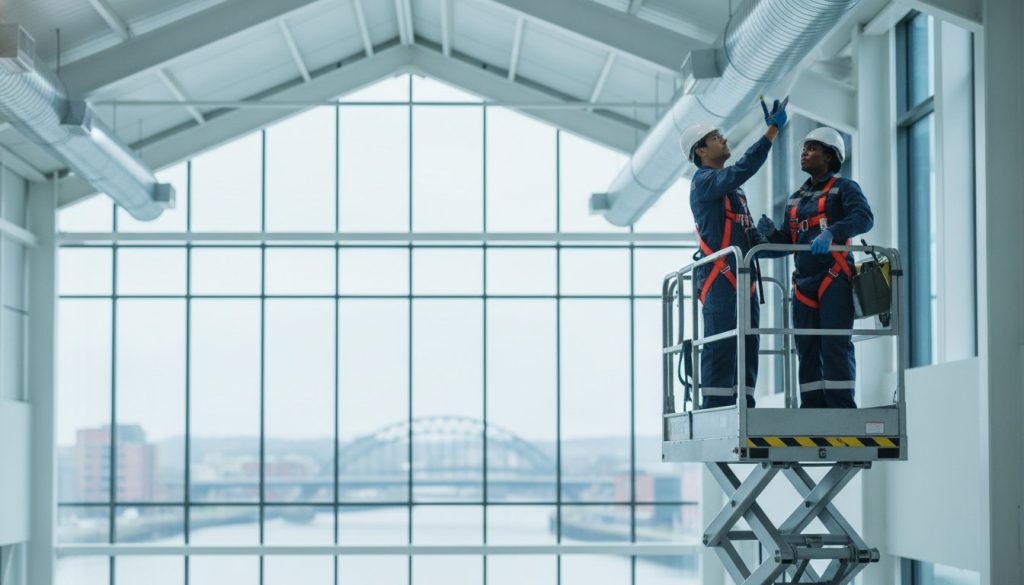
Effective high level cleaning requires a strategic approach to equipment selection. For many facilities, mechanical access remains the gold standard for precision. Mobile Elevating Work Platforms (MEWPs), such as scissor lifts and cherry pickers, allow operatives to work closely with intricate structural elements. This ensures that every rafter and duct is hand-cleaned to a professional standard. Alternatively, ground-based solutions like long-reach vacuum systems with integrated camera monitoring offer a non-invasive option. These systems allow for thorough cleaning from the floor, which is ideal for environments where heavy machinery access isn’t practical or where disruption must be kept to an absolute minimum.
Safety isn’t merely a preference in high level cleaning; it’s a legal mandate. Every project must strictly adhere to the Work at Height Regulations 2005. These rules place the responsibility on employers to ensure that all work is properly planned and supervised. Professional teams understand that operational efficiency is just as vital as safety. By organising cleans around your specific shift patterns or closing hours, downtime is virtually eliminated. This methodical planning ensures that your specialist industrial cleaning is completed without hindering your daily output.
Certified Expertise: IPAF and PASMA
Hiring contractors without the correct credentials introduces unnecessary risk to your business. Operatives should hold current IPAF (International Powered Access Federation) and PASMA (Prefabricated Access Suppliers’ and Manufacturers’ Association) certifications. These qualifications prove that the team is competent in handling powered access and mobile towers safely. Alongside this, every job must be preceded by site-specific Risk Assessments and Method Statements (RAMS). This documentation provides a clear framework for the project, ensuring all hazards are identified and mitigated before any equipment is unloaded.

Compliance, Insurance, and the Risks of Neglect
Insurance providers increasingly view accumulated dust as a material fact in risk assessment. If combustible particulates settle on high-level surfaces, they create a secondary fuel source that allows fire to travel across the building footprint with alarming speed. Failure to demonstrate a consistent schedule of high level cleaning can lead to the invalidation of commercial policies, leaving a business exposed to immense financial loss during a claim. It’s a risk that no responsible operator should take, particularly when the safety of personnel and the protection of professional reputations are at stake.
Beyond fire safety, hygiene standards directly impact workforce well-being. Dust reservoirs in high-access areas contribute to “sick building syndrome,” where poor air purification leads to increased staff absenteeism and lethargy. For those in highly regulated sectors, meeting the requirements for BRCGS food safety or CQC healthcare audits is impossible without documented high-access maintenance. Integrating these specialist tasks with your daily office cleaning services ensures a comprehensive approach to site hygiene. To secure your facility and ensure full compliance, you should contact a specialist for a site survey.
Protecting Your Professional Reputation
First impressions are often formed by the details that sit just out of regular sight. Visible cobwebs, grime, and thick dust on high-mounted fixtures or mezzanine levels negatively impact client perceptions, particularly in car showrooms or professional office atriums. Adhering to standards set by bodies like the Industrial Rope Access Trade Association ensures that even the most difficult areas are managed with technical precision. Regular building maintenance cleaning commercial prevents the long-term corrosion of structural steelwork caused by settled particulates. This proactive care preserves the asset value of your property and prevents costly structural repairs in the future.
Choosing a Dependable High Level Cleaning Partner in the North East
Selecting a partner for high level cleaning requires more than just a price comparison. It’s about finding a local North East entity that understands the logistical nuances of Sunderland, Newcastle, and Durham business parks. National providers often lack the agility and specific regional insight needed to manage site-specific challenges. A dependable partner conducts a thorough initial survey, offering a transparent breakdown of equipment lists, access requirements, and clear project timelines. This level of detail ensures there are no hidden costs or unexpected operational delays once the project begins.
Richard’s Cleaning and Washroom Services (RCWS) positions itself as a “safe pair of hands” for industrial cleaning Sunderland and across the wider North East. Transitioning from a reactive, one-off deep clean to a scheduled maintenance contract is the most effective way to ensure ongoing compliance. This proactive approach prevents the build-up of hazardous dust and ensures your facility is always audit-ready, protecting both your staff and your professional reputation.
Bespoke Solutions for Every Facility
No two commercial structures are identical. A professional cleaning methodology must be tailored to the specific height, layout, and accessibility of your premises. Whether your facility features complex racking or sensitive production machinery, the strategy should prioritise safety and precision. Managing your washroom hygiene services North East and high-level cleans through one dependable provider streamlines communication and ensures a consistent standard of hygiene across the entire site. This holistic management style reduces administrative burden and guarantees that every corner of your facility, from the rafters to the washrooms, meets rigorous professional standards.
Securing Your Facility Through Expert Maintenance
High level cleaning is not merely a cosmetic choice; it’s a fundamental pillar of professional risk management. Addressing the structural areas above two metres eliminates combustible dust hazards and ensures air quality remains within safe parameters. We’ve examined how technical precision, supported by IPAF and PASMA certifications, allows for thorough sanitisation without compromising operational uptime. Ensuring full compliance with the Working at Height Regulations 2005 protects your staff and preserves your commercial insurance validity.
As authoritative local experts in Newcastle and Sunderland, RCWS offers a dependable partnership for your industrial and building maintenance solutions. We provide the meticulous detail required to keep your premises audit-ready and structurally sound. Request a professional high level cleaning survey for your North East premises to establish a methodical maintenance schedule that guards your professional reputation. Proactive care today creates a cleaner, safer, and more efficient workplace for your team.
Frequently Asked Questions
What is considered high level cleaning?
High level cleaning refers to the specialist sanitisation of areas above two metres that are inaccessible to standard janitorial teams. This includes structural steelwork, rafters, ventilation ducting, and high-mounted lighting fixtures. It requires specialist equipment and trained operatives to manage risks safely. By addressing these often-neglected zones, businesses can prevent the accumulation of combustible dust and maintain high standards of hygiene throughout their facility.
How often should a commercial building have a high level clean?
The frequency of cleaning depends on your specific industry and the level of environmental pollutants present. Industrial facilities or food production sites often require high level cleaning every six to twelve months to remain compliant with safety standards. Conversely, professional office environments may only need an annual deep clean to maintain air quality and aesthetic standards. A site survey is the most reliable way to determine a bespoke schedule.
Will high level cleaning disrupt my business operations?
Professional teams typically organise cleans around your operational hours to ensure minimal disruption. Work can be scheduled during evenings, weekends, or planned shutdowns to allow for the safe deployment of access equipment. Methodical planning ensures that the cleaning process doesn’t hinder your daily output. By coordinating with your facility manager, we ensure that safety and productivity are maintained simultaneously throughout the duration of the project.
Do I need to provide the access equipment for the cleaning team?
You don’t need to provide any equipment as a specialist contractor will supply all necessary access platforms and tools. This includes Mobile Elevating Work Platforms (MEWPs) such as scissor lifts or cherry pickers, as well as ground-based long-reach vacuum systems. The cost of hiring and transporting this equipment is usually integrated into the project quote. This ensures that only certified, well-maintained machinery is used on your premises by qualified operatives.
Is high level cleaning a legal requirement for UK businesses?
Whilst there isn’t a single law titled “high level cleaning,” it’s a critical component of meeting your duties under the Health and Safety at Work etc. Act 1974. Regulation 9 of the Workplace (Health, Safety and Welfare) Regulations 1992 also requires that workplaces and fittings be kept sufficiently clean. Failure to manage dust accumulation can lead to fire safety breaches, potentially resulting in HSE fines or the invalidation of insurance.