

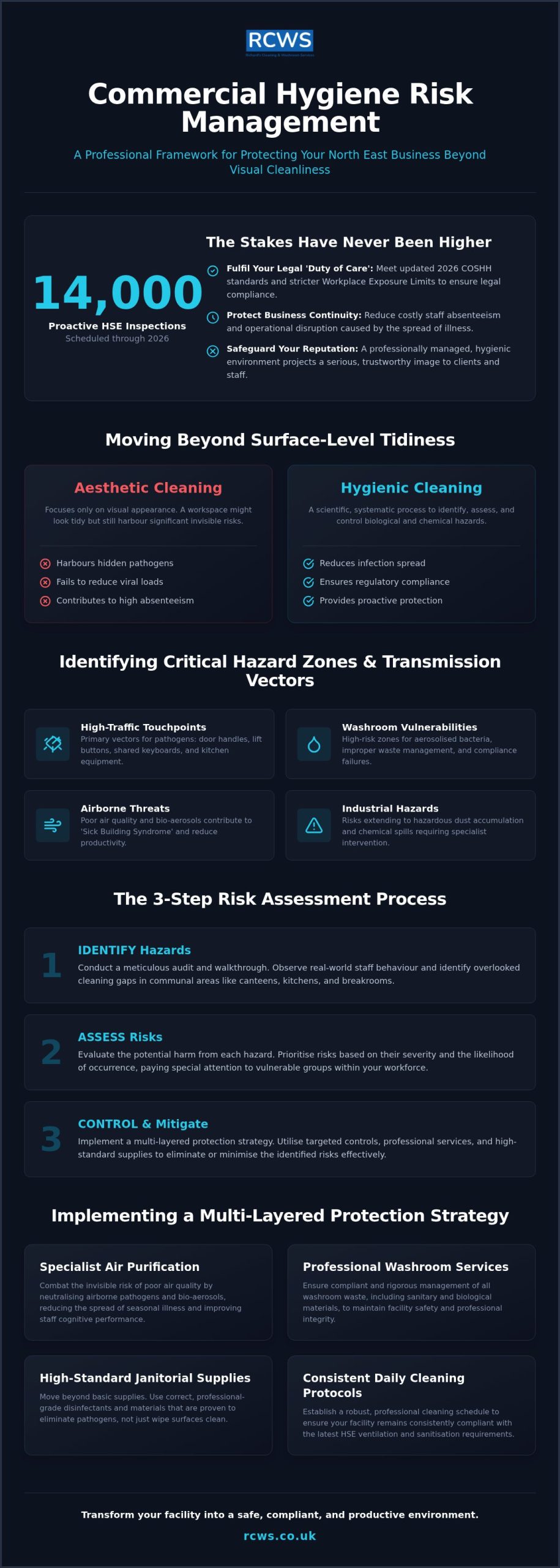
Effective commercial hygiene risk management is no longer merely about the visual appearance of a workspace; it’s a fundamental requirement for business continuity and legal compliance. With the Health and Safety Executive (HSE) conducting approximately 14,000 proactive inspections through 2026, the stakes for North East businesses have never been higher. You likely recognise that high staff absenteeism and inconsistent cleaning standards don’t just hurt morale; they directly impact your bottom line and professional reputation.
This guide provides a professional framework to identify hidden hazards and meet updated 2026 COSHH standards. We’ll explore the transition from basic cleaning to integrated environmental control, covering everything from Airsteril air purification to bespoke washroom compliance and revised Workplace Exposure Limits. By the end of this article, you’ll have the knowledge to transform your facility into a safe, compliant, and productive environment that protects your staff while projecting a serious, professional image to your clients.
Key Takeaways
- Master the systematic approach to identifying biological and chemical hazards to fulfil your legal ‘Duty of Care’ as a North East employer.
- Learn to identify critical transmission vectors, from high-traffic touchpoints to the invisible risks associated with indoor air quality.
- Utilise a professional framework for commercial hygiene risk management to conduct effective audits and protect vulnerable groups within your workforce.
- Establish a multi-layered protection strategy using specialist air purification, professional washroom services, and high-standard janitorial supplies.
What is Commercial Hygiene Risk Management and Why is it Critical?
Commercial hygiene risk management is the systematic process of identifying, assessing, and controlling biological and chemical hazards within a workplace. It moves far beyond simple tidiness, focusing instead on the scientific mitigation of pathogens that cause illness and operational disruption. For employers across the North East, including those in Newcastle, Sunderland, and Durham, this isn’t just a best-practice recommendation; it’s a fundamental part of your legal ‘Duty of Care’. Failing to address these invisible risks leads to high staff absenteeism and can severely damage your reputation amongst clients who expect a safe, professional environment.
There’s a critical distinction between aesthetic cleaning and hygienic cleaning. While a desk or washroom might look tidy to the naked eye, it can still harbour significant viral and bacterial loads if not treated with the correct protocols. True hygiene management protects operational continuity by reducing the spread of infections that lead to costly staff downtime. By integrating a formal risk assessment process, businesses can move from reactive cleaning to proactive protection. This strategic approach ensures that resources are directed where they are most needed, such as high-traffic touchpoints and shared facilities.
The Regulatory Landscape for UK Businesses
In 2026, the Health and Safety Executive (HSE) has placed a renewed focus on health-based interventions. This includes stricter enforcement of COSHH (Control of Substances Hazardous to Health) regulations and updated Workplace Exposure Limits for various particulates. Meeting these rigorous standards requires more than an ad-hoc approach; it demands consistency. Professional daily office cleaning services are essential for ensuring your facility remains compliant with the latest ventilation and sanitisation requirements. Ultimately, robust hygiene management is a legal necessity for all UK commercial premises in 2026 to ensure the safety of employees and visitors alike.
Identifying Key Hygiene Hazards in Your Commercial Facility
Identifying specific hazards is the cornerstone of a robust commercial hygiene risk management strategy. High-traffic touchpoints such as door handles, lift buttons, and shared office equipment act as primary transmission vectors for pathogens. In industrial environments across Sunderland and Durham, these risks extend to hazardous dust accumulation and chemical spills that require specialist intervention. Adhering to the Workplace (Health, Safety and Welfare) Regulations 1992 ensures these physical hazards are managed according to statutory requirements, protecting both your workforce and your legal standing.
Washroom Vulnerabilities and Compliance
Washrooms represent a significant risk zone where aerosolised bacteria and improper waste management can quickly compromise facility safety. Inadequate feminine hygiene provision isn’t merely a compliance failure; it creates a genuine health hazard. Many local firms prioritising meticulous standards seek phs group alternatives in the North East for more attentive, bespoke sanitary bin services. A dependable partner ensures biological waste is managed with the necessary rigour, maintaining the professional integrity of your premises while ensuring full regulatory adherence.
Airborne Hazards and Office Productivity
Modern office blocks in Newcastle and Gateshead often contend with the invisible risk of poor air quality. Bio-aerosols facilitate the rapid spread of seasonal illnesses, contributing to the high absenteeism rates often associated with ‘Sick Building Syndrome’. This environmental factor directly impacts cognitive performance and overall office productivity. Managing airborne pathogens is now as critical as surface disinfection in any comprehensive safety plan. If you’re concerned about your current standards, reviewing your washroom and air quality protocols is a prudent step towards a safer workplace.
A Step-by-Step Checklist for Hygiene Risk Assessment
Conducting a meticulous audit is the essential first stage in any professional industrial hygiene risk assessment. For facilities in Sunderland or Durham, this begins with a detailed walkthrough to observe real-world staff behaviour and identify overlooked cleaning gaps. You should scrutinise areas where people congregate, such as canteens or breakrooms, rather than just focusing on individual desks. Next, identify vulnerable groups amongst your workforce, including visitors, cleaning staff, and immunocompromised employees, as their protection requires specific consideration within your commercial hygiene risk management framework.
Evaluating your current controls is equally vital. You must determine if your existing daily cleaners are actually disinfecting critical surfaces or simply emptying bins and wiping surfaces for aesthetic appeal. Finally, record every finding in a centralised hygiene log. This document serves as tangible evidence of compliance for regulatory inspectors and ensures your commercial hygiene risk management strategy remains transparent and actionable across the organisation.
Evaluating Cleaning Efficacy
To assess your current contractor, ask specific questions about their disinfection protocols. Do they use hospital-grade chemicals? How frequently are high-traffic zones treated? Integrating advanced environmental controls, such as reducing staff sickness through air sterilisation, provides a recorded control measure that significantly improves safety. If your current provider cannot demonstrate these standards, it’s time to consult with a specialist to secure your premises.
Reviewing and Updating Protocols
Hygiene requirements are never static. You should schedule quarterly audits to adapt to seasonal illness peaks, such as norovirus or winter flu. It’s also necessary to update your risk assessment whenever office layouts change or staff numbers increase. This proactive approach ensures your hygiene standards evolve alongside your business operations.
Implementing Proactive Controls and Professional Hygiene Services
Implementing a multi-layered defence is the final, most critical stage of commercial hygiene risk management. Relying solely on surface disinfection is insufficient; a robust strategy must integrate air purification and stringent hand hygiene protocols. Using professional-grade janitorial supplies is essential. These industrial-strength chemicals are formulated to remain effective against modern pathogens that standard retail products often fail to neutralise. By partnering with a local North East expert, businesses gain access to bespoke service delivery that responds to the specific operational demands of Newcastle, Gateshead, and Sunderland.
The Role of Specialist Technology
Airsteril units represent a significant advancement in environmental control. These systems work by eliminating odours and killing bacteria at the source, ensuring that washrooms and offices remain hygienic even between scheduled cleaning shifts. Automated air purification provides consistent 24/7 protection, effectively reducing the human error factor often found in traditional hygiene management. This technology ensures that high-risk areas are constantly treated, maintaining a standard of safety that manual wiping alone cannot achieve.
Streamlining Hygiene with Integrated Services
Consolidating your facility requirements under a single provider simplifies the management process and ensures no gaps exist in your safety protocols. Combining daily office cleaning with washroom management and the consistent replenishment of janitorial supplies creates a seamless environment for both staff and clients. Richard’s Cleaning and Washroom Services (RCWS) stands as the premier choice for commercial building maintenance in Newcastle. This integrated approach allows North East business owners to focus on their core operations, knowing their premises are managed by an authoritative industry expert.
Securing Your Professional Reputation Through Enhanced Hygiene
Effective commercial hygiene risk management is a strategic investment in your organisation’s resilience. By moving from basic cleaning to a rigorous, multi-layered approach, you protect your staff from preventable illness and ensure full compliance with evolving HSE and COSHH standards. We’ve explored how identifying high-traffic touchpoints and integrating specialist technology like Airsteril units can transform your facility into a consistently safe environment. Maintaining these high standards requires a safe pair of hands that understands the specific challenges faced by businesses in the North East.
Richard’s Cleaning and Washroom Services (RCWS) provides expert local support across Newcastle and Gateshead, offering bespoke sanitary bin solutions and advanced environmental controls. We act as a dependable partner, ensuring your premises meet the highest professional standards while you focus on your core business goals. Don’t leave your reputation to chance when a structured, authoritative approach is within reach.
Request a Professional Hygiene Audit for Your Business
We look forward to helping you maintain a healthier, more productive workplace for your team and clients alike.
Frequently Asked Questions
What is the legal requirement for hygiene risk management in UK offices?
UK employers have a statutory ‘Duty of Care’ under the Health and Safety at Work etc. Act 1974 to provide a safe working environment. This includes managing biological and chemical risks as outlined in the COSHH 2026 updates. Failure to implement a robust commercial hygiene risk management plan can lead to HSE interventions, especially with the 14,000 proactive inspections planned through 2026.
How often should a commercial hygiene risk assessment be reviewed?
You should review your assessment at least annually, though quarterly reviews are recommended to account for seasonal illness peaks like norovirus. Immediate updates are required if your office layout changes, staff numbers increase significantly, or new equipment is installed. Maintaining an up-to-date log ensures your protocols remain effective and demonstrates ongoing compliance to health and safety inspectors during unannounced visits.
Can air sterilisation units really reduce staff sickness rates?
Yes, air sterilisation units like Airsteril significantly reduce sickness by eliminating 99.9% of airborne pathogens and bio-aerosols. Unlike manual cleaning, these units provide 24/7 protection, constantly purifying the air and treating surfaces that are difficult to reach. By removing the primary transmission vectors for seasonal flu and colds, businesses often see a measurable decline in short-term absenteeism and improved overall office productivity.
What are the most common hygiene hazards in a professional washroom?
The primary hazards include aerosolised bacteria from flushing, improper sanitary bin maintenance, and contaminated high-traffic touchpoints like taps and flush handles. Without specialist washroom services, these areas become breeding grounds for pathogens. Effective commercial hygiene risk management requires professional waste disposal and automated sanitisation to mitigate these risks, ensuring the facility remains safe for staff and projects a professional image to visiting clients.
Why is a commercial cleaning contract better than in-house cleaning for risk management?
Professional contracts offer access to specialist training and industrial-grade janitorial supplies that in-house teams often lack. Contractors provide a ‘safe pair of hands’ with established protocols for COSHH compliance and rigorous disinfection. This external oversight ensures consistent standards and provides a clear audit trail. It shifts the burden of regulatory adherence to experts, allowing you to focus on core operations with total peace of mind.