
With work-related illness and injury costing the UK economy an estimated £22.9 billion in the last financial year, can your organisation afford to overlook the finer details of its sanitary environment? You likely recognise that a clean office is essential for staff morale, yet implementing a consistent workplace hygiene checklist for businesses often feels like a moving target. Inconsistent cleaning from external providers or confusion over evolving HSE regulations can leave your operations vulnerable to high absenteeism and avoidable reputational risk.
We understand the weight of this responsibility and the need for a dependable partner to manage these operational complexities. This guide provides a comprehensive hygiene framework aligned with the 2026 commercial standard to protect your workforce and ensure strict compliance. We’ll explore a three-pillar system covering surface sanitisation, specialist washroom management, and advanced air sterilisation. By following this auditable protocol, you’ll be equipped to reduce staff sickness rates and maintain a professional environment that commands respect from every client who visits your premises.
Key Takeaways
- Understand how to align your facility with 2026 HSE and COSHH standards to ensure legal compliance and protect your professional reputation.
- Implement a structured workplace hygiene checklist for businesses that targets high-touch surfaces and shared workstations to reduce staff absenteeism.
- Discover how advanced air sterilisation and professional washroom management can significantly improve the safety and atmosphere of your corporate environment.
- Evaluate the benefits of a managed janitorial supply system to prevent hygiene gaps and maintain consistent, professional standards.
- Learn why a local, specialised partnership in the North East offers a more reliable and auditable protocol than managing hygiene in-house.
Understanding UK Workplace Hygiene Regulations and Standards
Compliance is not a matter of choice; it is a fundamental legal obligation. The Health and Safety at Work Act 1974 remains the cornerstone of UK workplace law, requiring employers to ensure the health, safety, and welfare of their staff. This duty extends to maintaining a sanitary environment that prevents the spread of illness. When managing these responsibilities, a robust workplace hygiene checklist for businesses acts as your primary defence during an HSE audit, providing a clear, documented trail of your due diligence.
Beyond general cleanliness, the Control of Substances Hazardous to Health (COSHH) regulations dictate how you manage cleaning chemicals. Improper storage or usage of industrial-grade disinfectants can lead to significant respiratory or skin-related risks. These statutory requirements are rooted in broader Occupational Hygiene Principles, which focus on the identification, evaluation, and control of environmental stressors in the workplace. Additionally, the Workplace (Health, Safety and Welfare) Regulations 1992 set specific standards for washroom facilities, mandating that they are kept clean and properly ventilated to protect employee dignity and health.
Why “Visually Clean” is No Longer Enough
It’s vital to distinguish between cleaning and sanitising. Whilst cleaning removes visible dirt and debris, sanitising targets the invisible pathogens that cause illness. Without a structured protocol, shared surfaces quickly develop biofilms. These are resilient layers of bacteria that colonise high-touch points like communal kettles or lift buttons. To maintain a truly safe environment, your daily routines must move beyond aesthetics to address these microscopic threats systematically.
Sector-Specific Compliance: Offices vs. Industrial Units
Hygiene needs vary significantly between sectors. Our experience in industrial cleaning Newcastle environments shows that compliance often centres on managing heavy particulates, grease, and chemical residues that can compromise both machinery and lung health. Conversely, office-based compliance focuses on “hot-desking” hygiene and communal kitchen standards. Using a tailored workplace hygiene checklist for businesses ensures that your specific operational risks, whether they be grease in a factory or bacteria on a shared keyboard, are effectively mitigated.
The Essential Daily and Weekly Workplace Hygiene Checklist
A structured workplace hygiene checklist for businesses serves as the operational backbone of a safe professional environment. It ensures that no critical touchpoint is overlooked, particularly in high-traffic zones where the risk of cross-contamination is highest. Daily attention must be focused on primary vectors such as door handles, lift buttons, and light switches. These surfaces are touched hundreds of times each day and require consistent sanitisation to prevent the spread of seasonal illnesses.
Workstation hygiene has become increasingly vital in modern offices where hot-desking is common. Keyboards, telephones, and shared desk spaces should be treated with appropriate disinfectants that are safe for electronic equipment. Similarly, kitchen and breakroom protocols must be rigorous. Fridge handles, kettles, and microwave interfaces are frequently used by multiple staff members and can quickly become reservoirs for bacteria if not addressed daily. Floor maintenance is also a core requirement; vacuuming high-traffic zones removes allergens, whilst mopping hard floors with COSHH-compliant disinfectants ensures a sanitary foundation for the entire building.
Daily Hygiene Priorities
Consistency is the hallmark of a dependable cleaning programme. Daily waste removal and the replacement of bin liners are essential to prevent odours and bacterial growth. Furthermore, maintaining the continuous restocking of janitorial supplies Newcastle ensures that hand hygiene stations remain fully functional. If your current provider is inconsistent in these fundamental tasks, it may be time to evaluate our daily office cleaning services to restore a dependable standard of care.
Weekly and Monthly Deep Cleaning Tasks
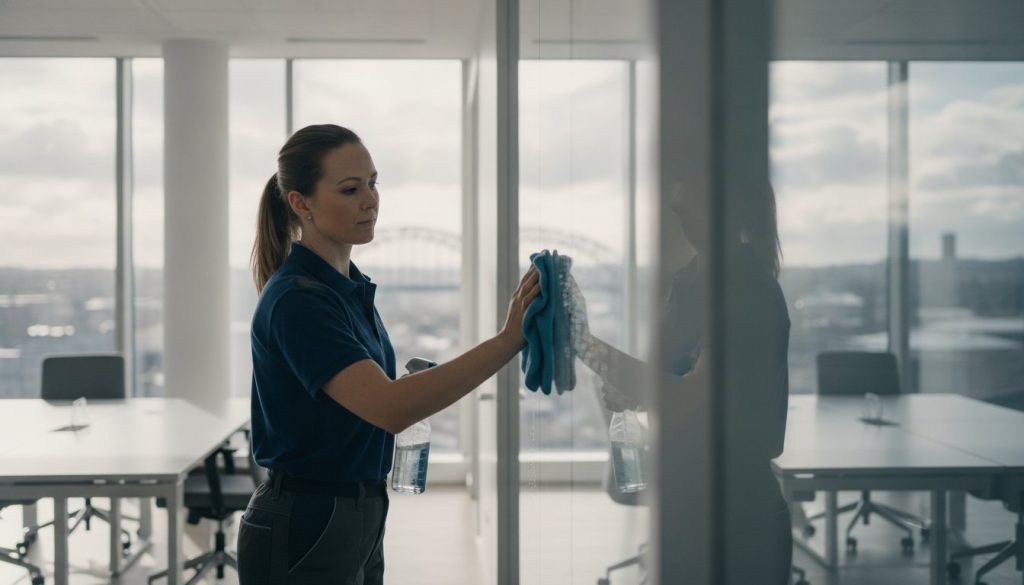
To reach the 2026 commercial standard, your strategy must include high-level maintenance. Weekly tasks should include dusting vents and light fittings to improve indoor air quality and prevent the circulation of dust amongst staff. Monthly deep cleaning of upholstery and carpets is necessary to remove embedded pollutants that standard vacuuming cannot reach. Finally, internal glass partitions and windows require regular sanitisation to maintain the polished, professional image that your clients expect.

Advanced Hygiene: Washrooms and Air Sterilisation
Whilst daily surface cleaning addresses visible risks, a truly robust workplace hygiene checklist for businesses must account for the invisible threats found in communal washrooms and the air. These areas are often the most scrutinised by employees and visitors alike. A failure to maintain high standards here doesn’t just risk health; it damages your professional reputation. Engaging with specialist washroom services Newcastle ensures that these high-risk zones are managed with technical precision and consistent care.
Legal compliance is another critical factor in washroom management. Sanitary bin services are not an optional extra; they’re a requirement under the Environmental Protection Act 1990. Businesses have a Duty of Care to ensure feminine hygiene waste is disposed of via licensed carriers. Beyond waste, the air itself requires attention. Many facilities rely on air fresheners, but masking odours with fragrance is not a hygiene strategy. Implementing Airsteril units allows you to eliminate airborne bacteria and viruses 24/7, providing a level of protection that manual cleaning alone cannot achieve.
Washroom Hygiene Standards
Scheduled deep cleans are necessary to prevent the buildup of uric scale and bacteria in urinals and toilets. These tasks go beyond the reach of daily maintenance. Your protocol should also evaluate hand drying solutions. Whilst paper towels are effective, HEPA-filtered dryers are now a commercial standard for their ability to remove 99.9% of bacteria from the air. Ensuring a consistent supply of high-quality soap and sanitiser is the final, essential step in a dependable washroom regime.
Continuous Air Purification
The link between reducing staff sickness air purification and your bottom line is clear. In poorly ventilated internal rooms, pathogens and Volatile Organic Compounds (VOCs) can linger, leading to increased absenteeism. Airsteril technology targets these contaminants at the source, purifying both the air and surrounding surfaces. This creates a safer, fresher environment that supports the long-term health of your workforce. To upgrade your facility to the 2026 standard, consider our specialist Washroom Services for a bespoke management plan.
Implementing a Managed Hygiene Strategy in the North East
Deciding between an in-house team and an outsourced provider is a pivotal operational choice for any organisation. Whilst managing hygiene internally might seem straightforward, the true cost often involves hidden burdens such as specialized equipment maintenance, recruitment, and the continuous training required for COSHH compliance. A professional partner removes these administrative pressures, providing a level of accountability that internal teams often struggle to maintain. By utilizing a comprehensive workplace hygiene checklist for businesses, a managed service provides a documented, auditable trail of cleanliness that is essential for both safety and reputation.
For organisations based in Gateshead, Sunderland, or Newcastle, the benefits of a regional partner are significant. Local expertise allows for rapid response times and a deeper understanding of the specific challenges faced by North East SMEs and industrial units. Our daily office cleaning services provide a scalable solution that adapts to your premises’ size and footfall. This ensures that janitorial stock levels are monitored proactively, preventing the hygiene lapses that occur when essential supplies like hand sanitiser or paper towels run dry.
Choosing a Local Cleaning Partner
Vetting is a non-negotiable step in implementing your strategy. You must ensure your contractor holds comprehensive insurance and can demonstrate a proven track record of training and regulatory compliance. Regional expertise matters because it fosters a sense of local reliability combined with industrial-scale capability. A partner who understands the local landscape acts as a “safe pair of hands” for your professional reputation, ensuring that your workplace hygiene checklist for businesses is executed to the highest commercial standard.
Monitoring and Auditing Your Hygiene Plan
A hygiene strategy is only effective if it remains auditable and transparent. Regular site inspections and “white glove” tests provide the objective data needed to verify that standards are being met consistently. We also recommend periodically soliciting staff feedback on workplace cleanliness and comfort. This direct insight ensures that your hygiene protocols remain employee-centric and that your investment in a managed service continues to protect your workforce effectively.
Securing Your Operational Excellence Through High Hygiene Standards
Maintaining a safe and compliant environment requires a shift from reactive cleaning to a proactive, managed strategy. By implementing a comprehensive workplace hygiene checklist for businesses, you address the invisible risks that lead to staff absenteeism and regulatory scrutiny. From sanitising high-touch surfaces to deploying continuous air purification, every element of your protocol contributes to a more resilient and professional organisation.
Richard’s Cleaning and Washroom Services brings over 20 years of expertise to commercial sites across the North East. As specialist Airsteril installers and washroom managers, we provide fully COSHH-compliant and insured services that protect your reputation. Our team acts as a dependable partner, ensuring your facility meets the 2026 commercial standard with meticulous attention to detail. Request a bespoke workplace hygiene audit from Richard’s Cleaning today to establish a protocol that safeguards your staff and impresses your clients. We look forward to helping you create a healthier, more productive workplace.
Frequently Asked Questions
What are the legal requirements for workplace hygiene in the UK?
UK employers must comply with the Health and Safety at Work Act 1974 and the Workplace (Health, Safety and Welfare) Regulations 1992. These laws mandate that workplaces are kept clean, properly ventilated, and provided with adequate sanitary facilities. Following a workplace hygiene checklist for businesses ensures you meet these statutory obligations and maintain a documented trail of compliance for HSE inspectors.
How often should a commercial office undergo a deep clean?
Most commercial offices should schedule a professional deep clean at least twice a year to maintain the 2026 commercial standard. However, high-traffic environments or those with communal kitchen facilities may require quarterly deep cleans to address the buildup of allergens and bacteria in carpets and upholstery. This intensive process complements your daily maintenance by targeting areas often missed during standard cleaning shifts.
Is a sanitary bin service legally required for small businesses?
Yes, businesses of all sizes are legally required to provide dedicated facilities for the disposal of feminine hygiene waste. Under the Environmental Protection Act 1990 and the Water Industries Act 1991, this waste must be managed by a licensed carrier. Failing to provide a serviced sanitary bin can lead to plumbing blockages and significant regulatory penalties for non-compliance with duty of care obligations.
What is the difference between cleaning, sanitising, and sterilising?
Cleaning involves the physical removal of dirt and organic matter from surfaces using water and detergent. Sanitising uses chemicals to reduce the number of germs to a safe level as defined by public health standards. Sterilisation is the most rigorous process, aimed at the total destruction of all microbial life, including spores. Most commercial environments focus on effective sanitisation for high-touch surfaces to maintain safety.
How can air purification units like Airsteril reduce staff absenteeism?
Airsteril units reduce absenteeism by continuously eliminating airborne bacteria, viruses, and mould spores that circulate in shared office environments. By purifying the air and surrounding surfaces 24/7, these systems prevent the cross-contamination that typically leads to seasonal illness outbreaks. This technology is particularly effective in internal rooms where natural ventilation is limited, ensuring a healthier workforce and improved productivity.
What janitorial supplies should a business always keep in stock?
A well-managed inventory should always include essential hand hygiene items such as soap and sanitiser, alongside paper towels and high-quality toilet tissue. You should also maintain a stock of COSHH-compliant surface disinfectants, bin liners, and microfibre cloths. Integrating these requirements into your workplace hygiene checklist for businesses prevents the hygiene gaps that occur when supplies unexpectedly run out during the working week.