

If your workplace appears spotless to the naked eye, can you be certain it isn’t harbouring invisible biological threats that could compromise your team’s health? Most business leaders equate a tidy office with a safe one, yet the distinction between aesthetic cleanliness and genuine commercial hygiene risk management is where significant operational risks reside. We recognise the pressure of managing health and safety legislation whilst fearing the impact of workplace illness on your productivity.
By following our expert-led framework, you’ll learn to identify hidden hazards and implement protocols that protect both your staff and your professional reputation. This guide delivers an actionable checklist for 2026, focusing on the transition from periodic cleaning to continuous, high-standard hygiene monitoring. We’ll outline how to reduce absenteeism and ensure your environment meets the rigorous safety expectations of the modern professional landscape, giving you total peace of mind regarding your duty of care.
Key Takeaways
- Understand the critical distinction between aesthetic cleaning and microbiological safety to ensure your facility meets 2026 health standards.
- Implement a robust commercial hygiene risk management framework that targets high-traffic touchpoints and ensures washroom integrity.
- Master a systematic five-step assessment process to identify hidden biological hazards and protect your staff, visitors, and contractors.
- Explore advanced solutions for mitigating airborne pathogens, including the use of Airsteril technology for continuous air purification.
- Learn how consolidating your cleaning and washroom contracts can streamline compliance and improve service reliability across the North East.
What is Commercial Hygiene Risk Management?
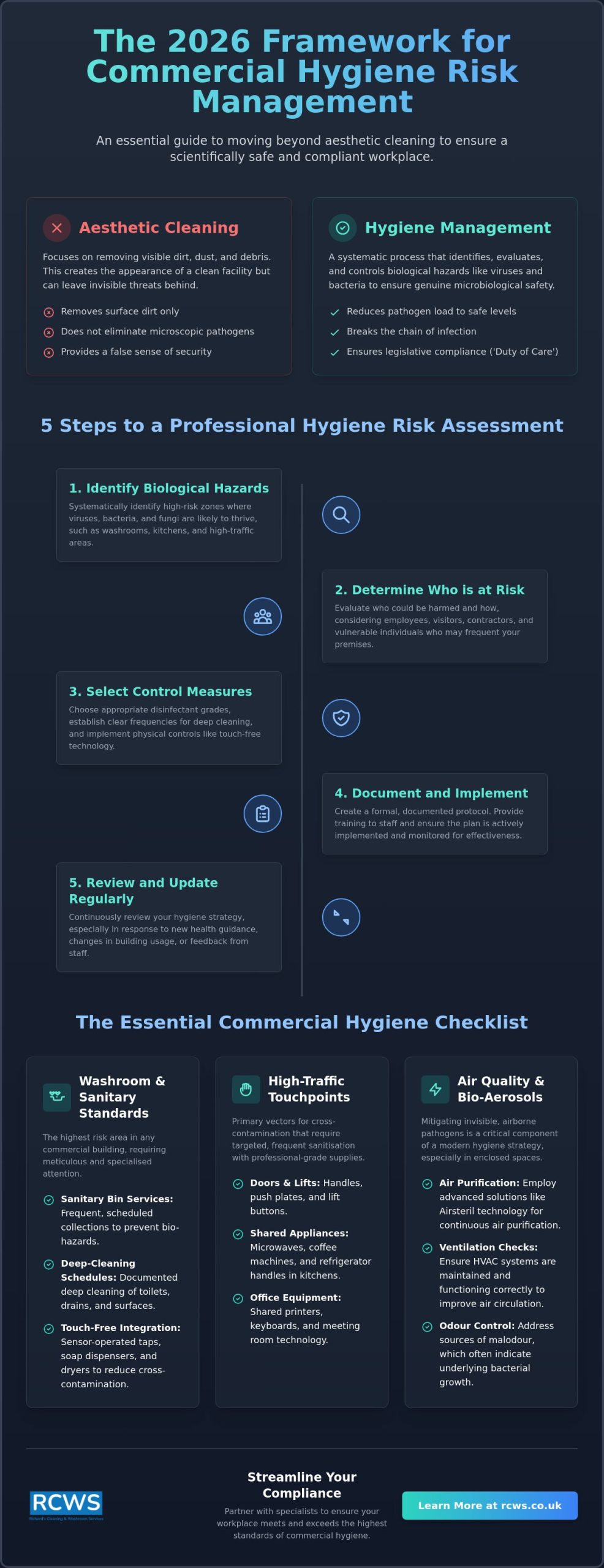
Commercial hygiene risk management is the systematic process of identifying, evaluating, and controlling biological hazards within a professional environment. It moves beyond surface-level tidiness to address the microscopic threats that cause illness and operational disruption. This disciplined risk assessment process ensures that potential vectors for infection, such as viruses, bacteria, and fungi, are mitigated through planned intervention rather than reactive cleaning. It’s a proactive safety protocol designed to protect the health of every individual who enters your building.
The Difference Between Cleaning and Sanitisation
A common misconception amongst many business leaders is that a ‘clean’ office is a ‘hygienic’ one. Cleaning is primarily an aesthetic task; it removes visible dirt, dust, and debris. Sanitisation, however, focuses on reducing the pathogen load to safe levels. A desk might appear polished, yet it can harbour thousands of bacteria per square inch if it isn’t treated with the correct professional-grade janitorial supplies. High-traffic touchpoints, such as door handles, lift buttons, and shared kitchen appliances, act as primary risk vectors. Without targeted sanitisation, these areas become hubs for cross-contamination, regardless of how often the floors are vacuumed.
Why a Formal Risk Management Strategy is Essential
Implementing a formal strategy is a commercial necessity. It breaks the chain of infection, directly reducing the number of sick days taken by staff and maintaining business continuity. Beyond internal productivity, your hygiene standards reflect your brand values to every client and visitor who enters your premises. A formal approach to commercial hygiene risk management also ensures full compliance with the Control of Substances Hazardous to Health (COSHH) regulations. It provides a documented trail of safety that protects the business during inspections. Effective management involves:
- Identifying high-risk zones where bacteria and viruses thrive.
- Determining who is at risk, including employees, visitors, and contractors.
- Selecting appropriate disinfectant grades for specific surfaces.
- Establishing clear frequencies for deep cleaning and daily maintenance.
- Breaking the chain of infection through better air and surface quality.
The Essential Commercial Hygiene Checklist
A robust checklist acts as the operational backbone of any commercial hygiene risk management strategy. It ensures that no area of the workplace is overlooked, particularly those invisible zones where pathogens thrive. Whilst standard cleaning focuses on appearance, this checklist targets the biological safety of the environment. Maintaining a high standard requires a methodical approach to every shared space, from the reception desk to the back-of-house facilities. It’s about moving beyond the visible to secure the health of your workforce.
International benchmarks, such as the OSHA Sanitation Standard, provide a foundational perspective on maintaining washing facilities and waste disposal systems that prevent the spread of pathogens. Adhering to these principles ensures your office remains a safe haven for productivity rather than a source of illness. Engaging a partner for professional Washroom Services ensures these complex requirements are met without burdening your internal facility managers.
Washroom and Sanitary Standards
The washroom is the highest risk area in any commercial building. It requires more than just replenished soap dispensers to remain safe. You should consider the following items as non-negotiable for your 2026 compliance:
- Sanitary Bin Services: Are collections frequent enough to match your building’s footfall? Overfilled bins are a significant bio-hazard.
- Deep-Cleaning Schedules: Is there a visible and documented schedule for deep-cleaning high-risk zones like toilet surrounds and floor drains?
- Touch-Free Integration: Have you implemented sensor-operated taps, soap dispensers, and flush mechanisms to eliminate common touchpoints?
Kitchen and Communal Area Protocols
Shared kitchens are often neglected hotspots for cross-contamination. Bacteria can spread rapidly across fridge handles, kettle switches, and microwave buttons. To mitigate these risks, your checklist must include:
- Surface Integrity: Regular assessment of shared appliance handles using virucidal cleaning agents at the correct dilution rates.
- Colour-Coded Equipment: Strict adherence to a colour-coded cloth and mop system to ensure kitchen tools aren’t used in other areas of the office.
- Waste Segregation: Clear protocols for the disposal of food waste and clinical items, ensuring bins are emptied daily and sanitised weekly.
Managing stagnant air is equally vital. Bio-aerosols can linger in sealed office environments, especially in corners with poor ventilation. Your checklist should account for air quality monitoring and the maintenance of purification systems. If persistent unpleasant smells are present despite regular cleaning, this is often a sign of underlying bacterial activity that requires dedicated workplace odour control systems rather than masking agents. Finally, keep a rigorous ‘Hygiene Log’. This document serves as your primary evidence during health and safety audits, proving that your commercial hygiene risk management plan isn’t just a policy, but a daily practice.
5 Steps to a Professional Hygiene Risk Assessment
A systematic risk assessment serves as the operational blueprint for commercial hygiene risk management. It’s not enough to rely on general cleaning schedules; you must understand the specific biological threats present in your unique facility. This five-step process provides a structured framework to ensure your Newcastle or Gateshead office remains compliant and safe for all occupants. By following this methodology, you move from reactive measures to a state of controlled, proactive safety.
- Identify the Hazards: Conduct a comprehensive audit to map out every area where bacteria or viruses thrive. This includes obvious touchpoints and hidden zones like ventilation ducts.
- Determine Who is at Risk: Evaluate how employees, visitors, and vulnerable contractors interact with the space. Different groups may face varying levels of exposure based on their movement patterns.
- Evaluate and Control: Implement specific interventions to mitigate identified risks. This might involve installing Airsteril units for continuous air purification or increasing the frequency of Daily Office Cleaning Services in communal hubs.
- Record and Implement: Formalise your findings into a written hygiene policy. A documented plan ensures every member of the team understands their role in maintaining safety standards.
- Review and Update: Schedule quarterly audits to account for seasonal changes. The hygiene risks in a building during the winter flu season differ significantly from those in the summer months.
Mapping Your Facility’s High-Risk Zones
Implementing Control Measures
When selecting interventions, prioritise your actions based on the ‘Hierarchy of Control’. Engineering controls, such as Airsteril technology, provide a constant layer of protection by sanitising the air and surfaces without manual intervention. For high-ceilinged lobbies or hard-to-reach structural elements, specialist Industrial Cleaning is often required to remove accumulated bio-matter. Finally, ensure your team uses the correct Janitorial Supplies for specific surface materials. Using an inappropriate disinfectant can damage surfaces or, worse, fail to neutralise the specific pathogens identified in your assessment. This methodical approach ensures that every step taken contributes to a measurably safer environment.
Mitigating Invisible Risks: Air Quality and Bio-aerosols
Visible surfaces represent only half of the biological landscape. In modern, sealed office environments across Newcastle and the North East, the air itself often becomes a reservoir for pathogens. Bio-aerosols, those microscopic droplets containing bacteria or viruses, can remain suspended in stagnant air for hours. Without proper intervention, these invisible threats bypass even the most rigorous surface cleaning protocols. This is why commercial hygiene risk management must evolve to include active air sterilisation as a core component of workplace safety.
Traditional methods frequently rely on masking unpleasant odours with chemical fragrances. This approach is fundamentally flawed as it does nothing to address the underlying biological cause. We prioritise a more scientific solution. By utilising Airsteril technology, businesses can eliminate bacteria, viruses, and moulds at the source. This creates a vital synergy between your surface sanitisation and environmental air quality, providing a comprehensive shield for your staff and visitors alike. It’s about ensuring the air your team breathes is as safe as the desks they work at. For a deeper understanding of how to address the root causes of airborne contamination, our guide to workplace odour control systems and commercial air hygiene provides a detailed technical framework.
The Science of Air Sterilisation
Airsteril units utilise a combination of ultraviolet light and ozone technology to neutralise pathogens whilst people continue to work. Unlike passive systems that wait for air to pass through a filter, this process actively seeks out contaminants in the air and on surfaces. It’s an essential tool for addressing ‘sick building syndrome’, which is often exacerbated by poor air turnover in contemporary office blocks. In high-occupancy or high-moisture areas such as washrooms and changing rooms, this technology provides continuous protection. It ensures that the environment remains fresh and safe throughout the working day without the need for constant manual intervention.
Integrating Technology into Your Hygiene Plan
While HEPA filters are useful for trapping physical particulates like dust, they often lack the capability to neutralise the sheer scale of biological risks in a busy workplace. Airsteril units represent a more effective choice for commercial hygiene risk management because they destroy pathogens rather than simply capturing them. For maximum efficacy, units must be strategically positioned to account for specific airflow patterns within your building. Whether you’re managing a large Northumberland warehouse or a multi-storey Durham office, the correct placement of these units is critical to ensuring total coverage.
Maintenance is straightforward but remains a priority. Regular lamp changes and internal checks ensure the system operates at peak performance. Integrating this technology into your broader building maintenance schedule ensures your air quality remains a documented and verifiable part of your safety compliance. It’s a dependable way to demonstrate your commitment to a high-standard, hygienic environment.
To protect your workforce from invisible airborne threats, learn more about our professional installation of Airsteril systems tailored to your specific facility.
Partnering with RCWS for North East Compliance
Operating throughout Newcastle, Sunderland, and Teesside, we provide a level of local responsiveness that national providers often struggle to match. In the context of commercial hygiene risk management, proximity is a critical factor for safety. Rapid response times and a deep understanding of North East business environments allow us to address emerging biological threats before they escalate into operational disruptions. We act as an authoritative partner, ensuring your facility remains a safe environment for every individual who passes through your doors.
Consolidating your Daily Office Cleaning Services and Washroom Services into a single contract offers significant strategic benefits. It eliminates the communication gaps that frequently occur when multiple vendors manage different aspects of building hygiene. This unified approach ensures that accountability is clear and that every touchpoint, from the reception desk to the sanitary facilities, is managed under a consistent safety standard. It simplifies your administrative burden whilst strengthening your overall risk posture.
We focus on making your organisation permanently audit-ready. Professional documentation is the cornerstone of regulatory compliance. We provide the meticulous records and ‘Hygiene Logs’ necessary to demonstrate your duty of care to health and safety inspectors. By partnering with RCWS, you gain access to a structured framework of hygiene audits and managed Janitorial Supplies, ensuring you never fall short of the required standards.
Bespoke Washroom and Cleaning Solutions
Every facility has unique requirements based on its layout and footfall. We don’t believe in a one-size-fits-all approach. For a manufacturing facility in South Shields, we might prioritise high-frequency Sanitary Bin Services to match a large shift-based workforce. In a Newcastle city centre office, the focus may shift towards the meticulous sanitisation of shared communal hubs. Our locally managed teams take pride in their attention to detail, specifically targeting the high-risk zones identified during your initial assessment to ensure a reliable and professional result every day.
Getting Started with a Hygiene Audit
Securing your premises begins with a comprehensive site survey. During this consultation, our experts conduct a thorough walk-through of your North East business premises to identify specific biological vulnerabilities. Following this survey, we provide a detailed risk proposal that outlines the necessary interventions, from air purification to surface protocols. This transparent process ensures you understand the exact steps required to mitigate risk and protect your professional reputation.
Secure your professional hygiene risk assessment with RCWS today and take the first step towards a demonstrably safer workplace.
Securing Your Professional Environment for 2026
Establishing a robust commercial hygiene risk management framework is no longer an optional luxury; it’s a fundamental requirement for business continuity and staff well-being. We’ve explored how the transition from visible cleanliness to verified microbiological safety requires a multi-layered approach. By combining meticulous surface protocols with advanced air sterilisation, you create a workplace that proactively defends against biological threats. This transition ensures your duty of care is met with the highest possible standards of professional integrity.
As a specialist Airsteril provider delivering daily cleaning for leading North East firms, we understand the specific regulatory stakes involved. Our comprehensive washroom and sanitary solutions ensure that every high-risk zone in your facility is managed with industrial-scale capability and local reliability. It’s time to move beyond guesswork and secure your professional reputation with a framework built on trust and technical competence. We’re here to provide the “safe pair of hands” your business needs to thrive in a demanding health and safety landscape.
Request a Professional Hygiene Risk Assessment for Your Business
Protecting your workforce is a serious responsibility, but with the right partner, it’s an achievable standard that brings lasting peace of mind and operational stability.
Frequently Asked Questions
What are the legal requirements for commercial hygiene in the UK?
UK employers must provide a safe and healthy working environment under the Health and Safety at Work etc. Act 1974. Specific duties regarding biological hazards are further detailed in the Control of Substances Hazardous to Health (COSHH) Regulations. These mandates require businesses to identify potential infection risks and implement effective control measures to protect employees and visitors from harmful pathogens.
How often should a hygiene risk assessment be reviewed?
You should review your assessment at least once every twelve months to account for seasonal variations in biological threats. However, an immediate review is necessary if you significantly alter your office layout, increase your workforce, or if an illness outbreak occurs. Regular updates ensure your commercial hygiene risk management strategy remains effective and compliant with current safety expectations.
Is a standard cleaning contract enough to manage hygiene risks?
A standard cleaning contract typically focuses on aesthetic tidiness, such as vacuuming and dusting, rather than microbiological safety. Whilst your office may appear spotless, pathogens can still thrive on high-traffic touchpoints and in the air. Effective risk management requires targeted sanitisation protocols and professional-grade disinfectants that go beyond the scope of traditional general cleaning.
What is the difference between an air purifier and an air steriliser?
Air purifiers generally use HEPA filters to trap physical particles like dust and pollen. In contrast, an air steriliser, such as an Airsteril unit, uses ultraviolet light or ozone technology to actively neutralise bacteria and viruses. Sterilisers are superior for biological risk reduction because they destroy pathogens rather than simply capturing them within a filter medium.
How do I manage hygiene risks in a shared office or co-working space?
Managing shared environments requires a focus on communal touchpoints, such as shared kitchen appliances and meeting room door handles. You should implement clear protocols for these areas and consider installing continuous air purification systems to mitigate risks from high occupant turnover. Establishing a shared responsibility agreement amongst all tenants ensures that high standards are maintained collectively.
What should be included in a commercial washroom hygiene service?
A comprehensive service should include regular Sanitary Bin Services, the replenishment of essential janitorial supplies, and the deep cleaning of high-risk surfaces like floor drains. It should also incorporate the maintenance of touch-free technology, such as sensor-operated taps and dispensers. These elements work together to break the chain of infection in the most vulnerable area of your facility.
Can I perform my own hygiene risk assessment?
Whilst you can conduct an internal walk-through, a professional audit provides a more robust level of protection and documentation. Specialists use technical expertise to identify “invisible” hazards, such as stagnant air pockets or water system ‘dead legs’, that internal teams might overlook. A professional assessment ensures your business is fully audit-ready and meets all relevant UK safety standards.
How does professional waste management contribute to risk reduction?
Professional waste management prevents the accumulation of bio-hazardous materials that can harbour bacteria and attract pests. By ensuring the timely and safe disposal of sanitary and clinical waste, you significantly reduce the risk of cross-contamination within your building. This service is a vital pillar of commercial hygiene risk management, ensuring that hazardous materials are handled according to strict regulatory guidelines.