

A commercial cleaning scope of work is far more than a simple checklist of daily chores; it is a vital risk-management document designed to protect your professional reputation. With OSHA penalties for serious violations reaching up to $16,550 per citation as of January 2026, the cost of ambiguity in your service standards has never been higher. When expectations aren’t clearly defined, you risk inconsistent results and potential health hazards that can compromise your entire workplace safety programme.
You’ve likely experienced the frustration of dealing with contractors who don’t quite meet the mark or the worry that your washroom hygiene isn’t up to scratch. We understand that maintaining a pristine environment is essential for both staff well-being and client trust. This article will show you how to draft a comprehensive scope of work that ensures impeccable hygiene standards whilst making it easier to choose the right partner for your daily office cleaning services or washroom services. We’ll provide a structured framework to compare quotes fairly and a detailed breakdown of tasks to help you build a safer, more professional environment for everyone.
Key Takeaways
- Understand how a robust scope of work acts as the essential foundation for any commercial contract, ensuring total alignment between your needs and the contractor’s delivery.
- Learn how to structure a commercial cleaning scope of work by categorising tasks by frequency and implementing colour-coded systems to eliminate cross-contamination risks.
- Discover the rigorous standards required for specialist zones, including the specific protocols for washroom management and compliant sanitary bin disposal.
- Identify the critical steps for drafting your own specification, from conducting site walkthroughs to establishing measurable Key Performance Indicators (KPIs).
- Gain a framework to compare cleaning quotes fairly, allowing you to select a partner who prioritises safety and professional reputation.
What is a Commercial Cleaning Scope of Work (SOW)?
A professional commercial cleaning scope of work serves as the foundational document for any service contract. It’s the definitive guide that bridges the gap between your specific expectations and the contractor’s actual delivery. Without this precise framework, facility managers often find themselves trapped in a cycle of “cleaning creep,” where service standards gradually erode because tasks weren’t explicitly defined from the outset. This document ensures that every square metre of your facility receives the attention it requires to remain safe, hygienic, and operational.
Commercial cleaning involves diverse environments with unique risks; therefore, a vague agreement is a liability. A robust SOW outlines exactly what will be cleaned, how often, and to what standard. It moves the conversation away from subjective opinions about “cleanliness” and towards objective, measurable outcomes. By establishing these boundaries, you protect your professional reputation and ensure that your investment in facility maintenance yields a tangible return in workplace hygiene.
The Legal and Professional Benefits of a Clear Specification
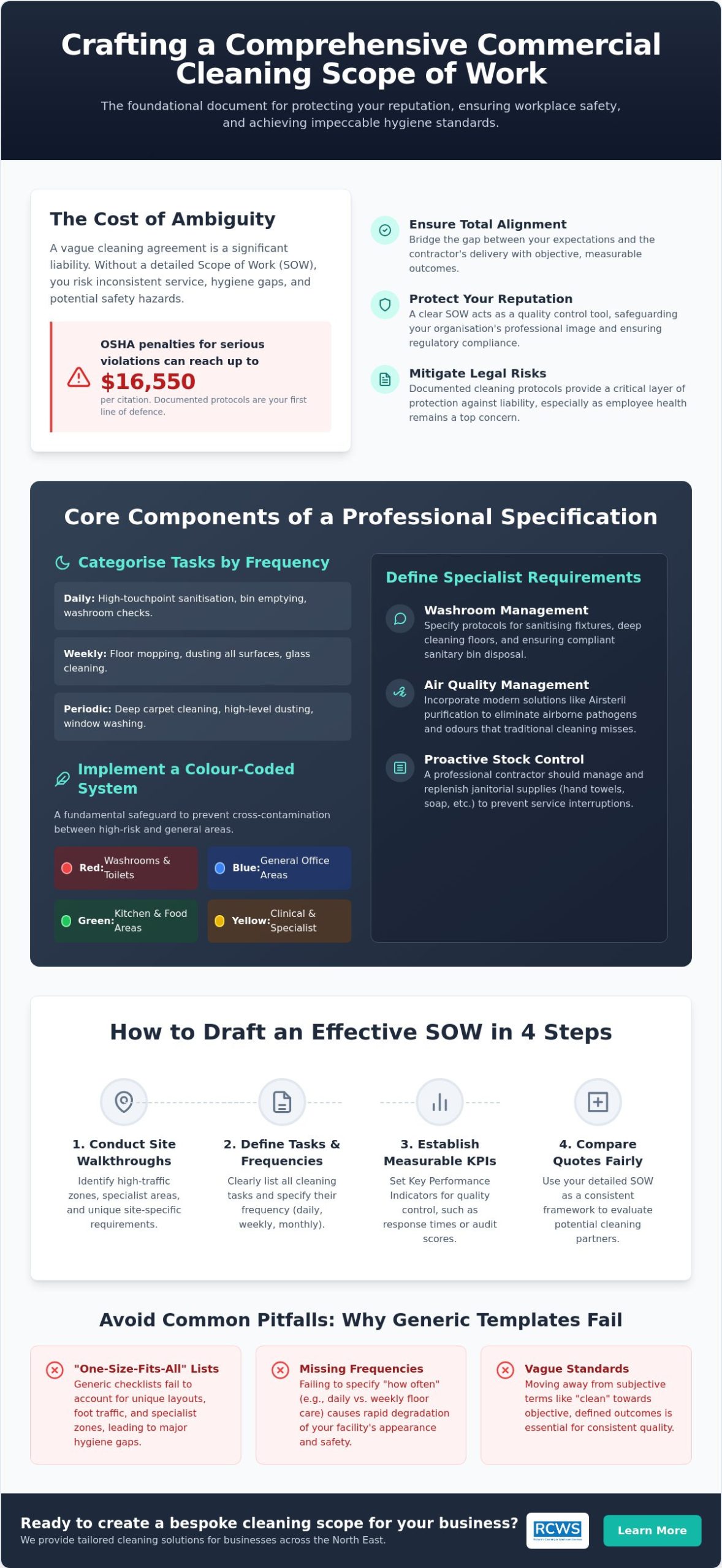
A well-drafted specification provides a critical layer of protection against liability through documented cleaning protocols. In a landscape where employee health and safety was cited as the top management concern for 30% of facility managers in 2025, having a clear record of service is essential. The SOW is the primary tool for quality control in facility management. It ensures your organisation remains compliant with UK workplace hygiene regulations whilst mitigating operational risks. For instance, the maximum penalty for a serious OSHA violation reached $16,550 in January 2026, which highlights the financial gravity of maintaining rigorous safety standards through documented procedures.
Common Pitfalls: Why Generic Templates Often Fail
Relying on a “one-size-fits-all” list is a common mistake that leads to significant hygiene gaps. Generic templates rarely account for bespoke office layouts or the specific requirements of high-traffic zones. If your scope fails to distinguish between daily tasks and periodic deep cleans, essential maintenance will inevitably be missed. Missing frequencies, such as failing to specify daily versus weekly floor care, can cause rapid degradation of your facility’s appearance and safety. A truly effective commercial cleaning scope of work must be tailored to your site’s unique foot traffic patterns, including specialist areas like server rooms or washrooms, to avoid these costly oversights.
Core Components of a Professional Cleaning Specification
A comprehensive commercial cleaning scope of work must be structured with precision to ensure no area is neglected. By categorising requirements into high-frequency, low-frequency, and periodic tasks, you create a methodical approach that aligns with the ISSA Clean Standards. This ensures that resources are allocated where they’re needed most, particularly in areas prone to rapid bacterial build-up. It’s about protecting both the physical asset and the people within it.
One of the most critical elements of a professional specification is the implementation of a colour-coded cleaning system. This protocol assigns specific colours to equipment and cloths for different zones, such as red for washrooms and blue for general office areas. It’s a fundamental safeguard that prevents cross-contamination between high-risk zones and communal spaces. Beyond physical surfaces, modern service standards now include indoor air quality management. Incorporating Airsteril air purification into your scope helps eliminate pathogens and odours that traditional cleaning cannot reach.
Effective facility management also requires proactive stock control. A professional contractor should manage your janitorial supplies, ensuring that essential items like hand towels and soap are always available. This integrated approach prevents service interruptions and maintains the high hygiene standards your staff expect. If you’re looking to refine your current protocols, reviewing our daily office cleaning services can provide a benchmark for your own specification.
Daily High-Traffic Tasks (The Essentials)
The core of any daily routine focuses on high-touchpoint sanitisation. These are the surfaces handled by dozens of people every hour, including door handles, light switches, and lift buttons. Neglecting these areas increases the risk of viral transmission amongst your workforce. Daily floor care in reception areas is equally vital for maintaining a professional first impression. This involves thorough vacuuming and mopping to remove debris and prevent long-term wear on flooring surfaces. Finally, waste management must be handled with care, ensuring bins are emptied and liners replaced correctly to prevent odours and pests.
Weekly and Monthly Deep Cleaning Protocols
Lower-frequency tasks address the areas that accumulate grime more slowly but are equally important for health and safety. Weekly protocols should include high-level dusting of vents, light fixtures, and the tops of cupboards to maintain air quality. Monthly tasks typically involve internal glass cleaning and upholstery maintenance to keep the office looking pristine. Kitchenettes and communal breakrooms require a more rigorous periodic deep clean, focusing on appliances where food residues can lead to bacterial growth if left unchecked.
Specialist Requirements: Washrooms and Industrial Zones
While general office areas require consistent maintenance, washrooms and industrial zones demand a significantly more rigorous commercial cleaning scope of work. These environments present unique biological and mechanical risks that standard janitorial routines aren’t equipped to address. Managing these spaces isn’t just about aesthetics; it’s a matter of regulatory compliance and protecting your professional reputation from the risks of negligence. A failure in these areas doesn’t just look bad, it can lead to health and safety breaches that compromise your entire operation.
The technical requirements for these zones are much higher than for communal breakrooms or reception areas. You need a partner who understands the gravity of these services and provides a dedicated approach to meticulous detail. This ensures that your facility remains a safe pair of hands for both your staff and your clients, adhering to industrial-scale standards regardless of the site’s complexity.
Washroom Hygiene Management and Compliance
Effective washroom management requires a structured approach to hygiene that goes beyond surface-level cleanliness. You must include specific protocols for sanitary bin services and feminine hygiene to meet legal waste disposal requirements and ensure the dignity of your workforce. Beyond physical surfaces, addressing airborne bacteria is critical for a truly hygienic environment. Integrating Airsteril units into your specification provides a continuous solution for eliminating odours and pathogens that traditional cleaning cannot reach. This standards-based approach aligns with the Green Seal GS-42 Standard, which prioritises health and environmental protection in commercial settings. Your scope should also mandate a consistent supply of consumables, ensuring that essential items like soap and paper towels are always available.
Industrial and Warehouse Cleaning Standards
The efficacy of your cleaning regime relies heavily on the quality of the products used. Professional-grade janitorial supplies are formulated for commercial-scale challenges and are often EPA-registered for proven disinfecting power. Using inferior retail products in an industrial or high-traffic washroom setting often leads to service degradation and hygiene gaps. By specifying the use of professional-grade chemicals and equipment, you ensure that your facility remains a safe, productive, and compliant environment for all staff and visitors.
How to Draft a SOW to Choose the Best Cleaning Partner
Creating a robust commercial cleaning scope of work begins with a thorough site walkthrough. This physical inspection allows you to identify unique challenges that a generic template would overlook, such as specific flooring materials, high-density touchpoints, or complex office layouts. By documenting these details, you provide potential contractors with the information they need to submit an accurate proposal. This process ensures you can compare quotes on an “apples with apples” basis, preventing the common mistake of choosing a provider based on a low price that masks a lack of thoroughness.
When evaluating potential partners, you must look beyond the task list. Request a detailed methodology that explains exactly how the contractor will deliver the service, including their approach to staff training and COSHH compliance. Verifying insurance credentials and health and safety protocols is essential for protecting your professional reputation. A provider who cannot demonstrate documented compliance with UK hygiene standards is a liability you cannot afford. To ensure your specification is both compliant and comprehensive, request a professional assessment for your building cleaning and maintenance needs.
Setting Measurable Standards (KPIs)
Defining “clean” in an objective way is the only way to maintain consistent quality over the life of a contract. Your scope should include clear Key Performance Indicators (KPIs) that allow for regular cleaning audits and inspections. These might include visual checks for dust on high-level surfaces or ATP swab testing in high-risk zones like washrooms. KPIs ensure accountability for contractors in Newcastle and beyond. By establishing these benchmarks early, you create a framework where performance is measured against facts rather than subjective opinions.
Evaluating the “Safe Pair of Hands”
In the North East, dependability and a strong local reputation are often better indicators of quality than the size of the corporation. You should look for a partner who offers a dedicated point of contact for contract management, ensuring that any issues are resolved promptly by someone who understands your site’s specific needs. The cheapest quote often indicates that a contractor hasn’t fully grasped the complexities of your commercial cleaning scope of work. A “safe pair of hands” prioritises meticulous detail and reliability, understanding that the protection of your facility’s hygiene is a serious responsibility that requires adequate resourcing and expert supervision. If persistent service failures are affecting your workplace, understanding when to switch commercial cleaning companies can help you make a timely and informed decision before standards deteriorate further.
Richard’s Cleaning: Bespoke Scopes for North East Businesses
Richard’s Cleaning and Washroom Services operates as a dedicated partner for businesses across the North East, providing the meticulous detail required to maintain high-standard environments. We understand that a generic approach to facility maintenance often leads to the service degradation discussed earlier in this guide. Instead, we specialise in developing a bespoke commercial cleaning scope of work that reflects the unique operational demands of your site. Whether you manage a corporate office in Newcastle or a manufacturing facility in Durham, our team provides the “safe pair of hands” necessary to protect your professional reputation and ensure regulatory compliance.
Our service delivery extends across Gateshead, Sunderland, and the wider region, integrating essential sub-services into a single, cohesive contract. By combining daily office cleaning with professional washroom services and janitorial supply management, we eliminate the administrative burden of managing multiple vendors. This integrated model ensures that hygiene standards remain consistent across all areas of your building, from high-traffic reception desks to specialist industrial zones. We don’t just clean surfaces; we manage the entire hygiene infrastructure of your business, ensuring that consumables are always stocked and high-risk areas are continuously monitored.
Why a Local Partner Matters for Your Business
Choosing a local provider offers distinct advantages that national corporations often struggle to match. Richard’s Cleaning and Washroom Services provides rapid response times for clients in commercial cleaning Northumberland areas, Northumberland, South Shields, and Teesside, ensuring that any urgent requirements or adjustments to your schedule are addressed with minimal delay. Our deep knowledge of local commercial sectors allows us to anticipate the specific challenges faced by retail centres, pharmaceutical labs, and industrial estates alike. As a privately owned business, we prioritise your reputation because our own success is built upon the trust and dependability we provide to the North East business community. This local accountability means that every contract receives the personal attention of a seasoned industry expert.
Get a Professional Scope of Work Consultation
Defining the right service standards requires an expert eye and a methodical approach. We invite you to request a comprehensive site survey, where our consultants will identify the specific high-touch points and high-traffic areas unique to your premises. This assessment forms the basis of your bespoke commercial cleaning scope of work, ensuring that every task is justified by a practical benefit and a measurable outcome. A combined contract that includes sanitary bin services and Airsteril air purification provides a holistic hygiene solution that is both cost-effective and operationally robust.
Contact Richard’s Cleaning and Washroom Services for a professional site assessment today to ensure your facility remains a safe, clean, and welcoming environment for staff and visitors alike.
Secure Your Professional Standards and Workplace Safety
A robust commercial cleaning scope of work is the only definitive way to eliminate ambiguity and ensure your facility meets modern hygiene expectations. By implementing objective KPIs and prioritising high-risk zones like washrooms, you move from reactive maintenance to proactive risk management. This structured approach doesn’t just improve aesthetics; it protects your staff and maintains your professional reputation against the risks of service degradation.
Richard’s Cleaning and Washroom Services brings over 20 years of experience in North East commercial cleaning to every partnership. As specialist Airsteril and washroom hygiene providers, we offer dedicated local support across Newcastle, Durham, and Sunderland. We’re ready to help you define a specification that serves as a “safe pair of hands” for your organisation. You don’t have to settle for inconsistent results when a tailored solution is within reach.
Take the first step towards a cleaner, safer professional environment. Request a bespoke cleaning and washroom quote for your North East business today.
Frequently Asked Questions
How often should a commercial cleaning scope of work be reviewed?
You should review your commercial cleaning scope of work at least once a year or whenever there’s a significant change in building occupancy or usage. For instance, an increase in staff numbers or the addition of new office zones requires a reassessment of task frequencies. Regular reviews ensure your hygiene standards remain aligned with current operational needs and health and safety requirements.
What is the difference between a cleaning specification and a scope of work?
A scope of work defines the broad objectives and boundaries of the service, whilst a cleaning specification is the granular task list detailing exactly what must be done. The SOW outlines the “what” and “why,” such as maintaining a hygienic environment for staff. The specification provides the “how” and “how often,” listing specific duties like daily touchpoint sanitisation or weekly high-level dusting.
Should I provide the cleaning supplies, or should the contractor?
It’s standard practice for the contractor to provide professional-grade janitorial supplies to ensure consistent hygiene outcomes. Using a contractor’s supplies guarantees that the chemicals are professional-grade and compliant with COSHH regulations. This approach also removes the burden of stock management from your facility team, as the provider monitors and replenishes items like soap and paper towels as part of the contract.
Does a commercial cleaning SOW include window cleaning or carpet shampooing?
These services are typically categorised as periodic tasks and must be explicitly included in your commercial cleaning scope of work to ensure they’re performed. Whilst daily routines focus on maintenance, restorative services like carpet extraction or external window cleaning are often scheduled quarterly or bi-annually. If these aren’t listed, they’re likely considered additional services outside the standard daily office cleaning agreement.
How do I ensure my cleaning company is compliant with COSHH?
You can verify compliance by requesting a copy of the contractor’s written COSHH assessments and up-to-date Safety Data Sheets (SDS) for all chemicals used on-site. Professional providers should also provide evidence of staff training in the safe handling of hazardous substances. This documentation is essential for your health and safety audit trail and protects your business from liability in the event of an inspection.
What are the most commonly missed items in an office cleaning scope?
High-level surfaces, such as the tops of cupboards and air vents, are the most frequently overlooked items in a standard scope. Other common omissions include the sanitisation of telephone handsets, cable management trays under desks, and the cleaning of internal glass partitions. Ensuring these items are listed with specific frequencies prevents the accumulation of dust and allergens that can compromise indoor air quality.
Can a scope of work include washroom services like sanitary bin collection?
A comprehensive SOW should include washroom services, such as sanitary bin collection and feminine hygiene protocols, to ensure full regulatory compliance. Integrating these requirements into your main contract provides a more streamlined management process and ensures that high-risk areas receive the rigorous attention they require. This holistic approach ensures that washroom hygiene is managed to the same high standards as the rest of your facility.
How do I measure if my cleaning company is meeting the agreed scope?
Measurement is best achieved through regular, documented cleaning audits based on the Key Performance Indicators (KPIs) defined in your contract. These inspections should involve visual checks and, in high-risk zones, objective testing methods like ATP swabbing. Consistent reporting allows you to track performance over time and ensures that the contractor remains accountable for the standards established in the original scope. If audits consistently reveal shortfalls, reviewing the critical signs it is time to switch commercial cleaning companies can help you determine whether a change of provider is the most effective course of action.